
Solarsat guide
TV aerial vs satellite vs streaming: which suits a rural home
In the countryside, the way you watch TV depends as much on your location as on what you like to watch. Here is how aerials, satellite dishes and streaming compare, and how to tell which will work best at your property.
Phones and email Monday to Saturday, 8:30am to 6pm. Showroom visits by appointment.
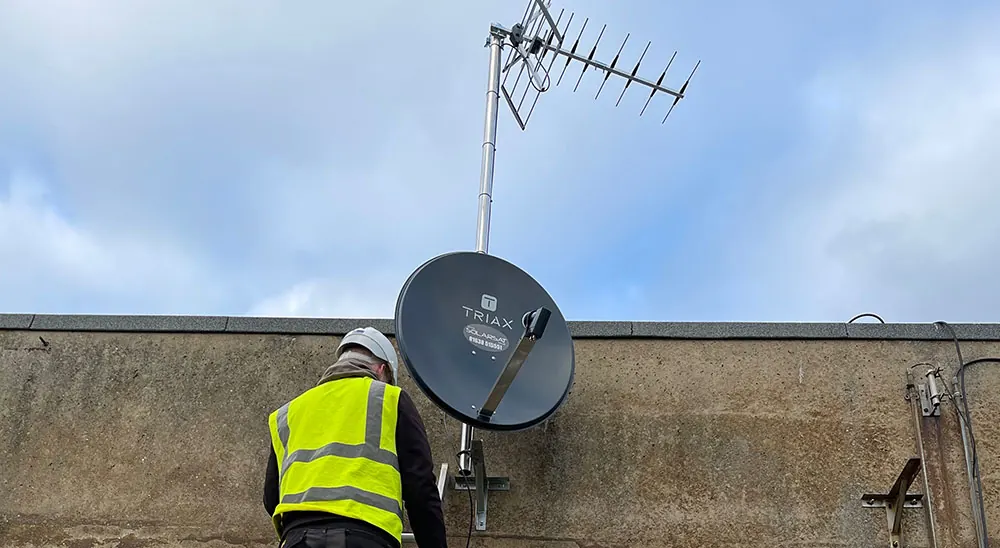
How a TV aerial gets its signal
A rooftop aerial picks up Freeview from a land-based transmitter. Reception depends on how far you are from that transmitter, what lies in between and how high the aerial sits. Hills, woodland and even a neighbouring barn can weaken the signal, which is why two houses in the same village can get very different results.
When reception is good, an aerial is hard to beat. There is no subscription, no reliance on broadband and the picture comes straight in. When it is poor, you see blocky pictures, missing channels or a screen that freezes whenever the wind picks up.
When a new aerial or an amplifier helps
Aerials age. Weather loosens brackets, corrodes connections and turns the aerial slightly off its transmitter. Cable that has been up for many years lets water in. In those cases a new aerial and fresh cable, correctly aligned, often restores a clean picture.
An aerial amplifier, sometimes called a booster, helps when a reasonable signal is being split between several TVs or run along long cables, and each set ends up with too little. It cannot rescue a signal that is not reaching the aerial in the first place, and adding one where the signal is already strong can make reception worse. Measuring signal strength at the aerial before buying anything is the only reliable way to know what is needed.
Satellite: Freesat or Sky
A satellite dish needs a clear line of sight to the south east, but it does not care about hills between you and a transmitter. That makes satellite a strong choice for rural homes where aerial reception is weak or patchy.
Freesat gives you free-to-air channels from a dish with no monthly subscription. It suits households who want the main channels reliably and are happy without premium sport and film packages. Sky uses the same kind of dish but comes with a subscription, a Sky box and access to its paid channels and on-demand services.
The dish itself is similar for both, so the decision is really about which channels and features you want and whether you are happy to pay monthly. Heavy rain or snow can briefly interrupt satellite pictures, and a dish has to be aimed accurately and fixed firmly to stay reliable.
Signs your current setup is the problem
Before choosing a new way to watch, it helps to know what is wrong with the old one. If every TV in the house has the same breakup, the problem is usually at the aerial or dish, or in the main cable. If only one room suffers, look at that room's cable, wall plate or the splitter that feeds it.
Problems that come and go with the weather point to a loose bracket, a dish knocked slightly off its satellite, or water in an old cable. Channels that vanish after a retune may mean the aerial is aimed at a different transmitter from the one that serves your area best.
For streaming, a speed test on the TV itself, rather than on a phone next to the router, shows what the set really receives. Poor Wi-Fi to the lounge is a common cause of buffering even on a decent broadband line, and a wired connection to the TV often cures it.
Streaming and the broadband question
Streaming services and catch-up apps run over your internet connection, not an aerial or dish. That makes them flexible, but they are only as good as your broadband. A slow rural line that struggles with one high definition stream will buffer badly if two people watch at once.
If your broadband is fast and stable, streaming can replace a good deal of traditional TV. If it is not, an aerial or dish remains the dependable backbone, with streaming used alongside. Better broadband, such as a well-placed satellite internet dish, can change that balance for homes with slow lines.
Combining them in one setup
Many rural homes end up with a mix: an aerial or Freesat dish for live channels, a Sky box in the lounge and streaming apps on every smart TV. The key is planning the cabling so each room gets the feeds it needs, rather than adding a new cable every time a TV moves.
We install and repair aerials and satellite dishes around Mildenhall and West Suffolk and can test the signal at your property before recommending anything. Call us or send an enquiry to arrange a visit.
Have a question about your own property? Contact our Mildenhall team.
Related services
Services this guide covers
TV aerials
TV aerial installation, extra TV points, multi-point systems for flats and repairs, with over 20 years of experience.
Find out more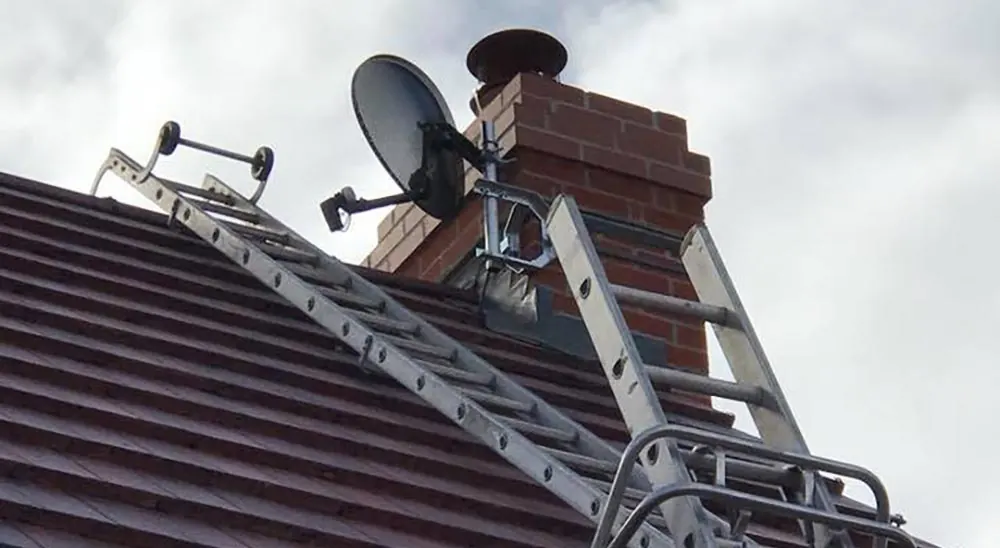
Satellite TV
Freesat, Sky and AFN installations, multi-dwelling systems and callout diagnostics for signal problems.
Find out moreFreesat installation
Subscription-free satellite TV dishes, installed and aligned, with feeds to each room and your aerial combined on one plate.
Find out moreSky dish installation
New Sky dishes, replacements and realignment, with feeds to extra rooms and fault finding when the picture drops out.
Find out more
FAQs
Frequently asked questions
Want advice for your own home or business?
Call our Mildenhall team or send an enquiry and we will talk through the options.
Enquiries
Ask us a question or get a quote
Tell us a little about your property and what you need. We will get back to you to talk it through.
- 01638 515551
- info@solarsat.co.uk
- Phones and email Monday to Saturday, 8:30am to 6pm
- 8 High Street, Mildenhall, Suffolk IP28 7EQ. Showroom visits by appointment.