
Solarsat guide
CCTV at home: what the law says in the UK
Most homeowners can fit cameras without any legal fuss, as long as they know where the line sits. This guide sets out the rules in plain terms, based on guidance from the Information Commissioner's Office.
Phones and email Monday to Saturday, 8:30am to 6pm. Showroom visits by appointment.
When data protection law applies to your cameras
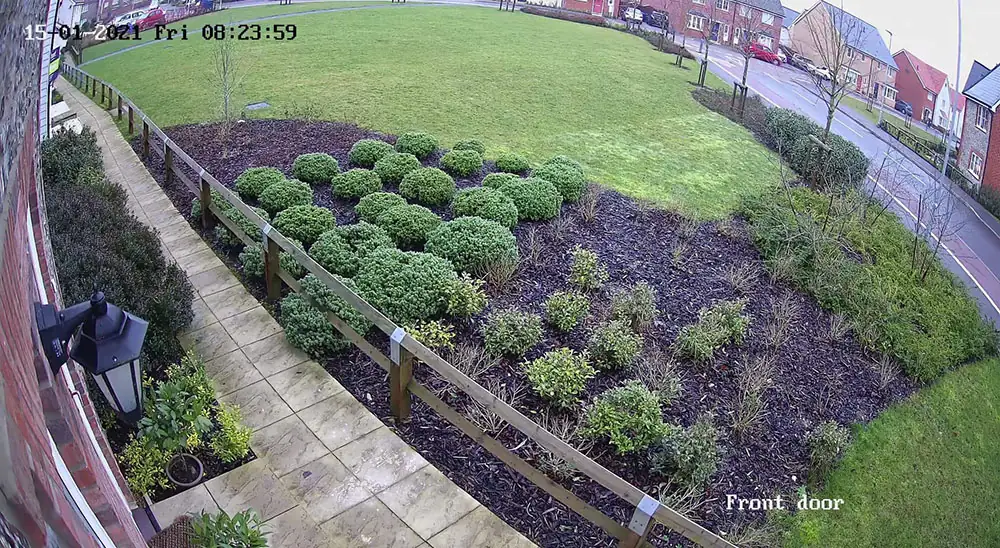
A camera that only ever sees your own house, drive and garden sits outside data protection law. The position changes the moment it captures anything beyond your boundary, such as the pavement, the road, a neighbour's garden or windows, or a shared space like a communal drive or car park.
The reason is simple. Images of people, and recordings of their voices, count as personal information. Once your system collects personal information about people outside your property, you take on some of the same duties that a business with CCTV has. That does not mean you have done anything wrong, only that you need to be able to explain and justify what you record.
It is worth checking audio in particular. Many modern cameras record sound by default, and sound often carries much further than the picture. A camera aimed squarely at your front door can still pick up conversations in the street.
Pointing cameras the right way
The ICO's first piece of advice is to point cameras only at your own property wherever you can. In practice that means thinking about angles before anything is fixed to the wall. A camera set a little lower, or turned a few degrees inwards, can often cover the front door, the car and the gate without taking in the house opposite.
Sometimes a view beyond the boundary cannot be avoided, for example where a front door opens straight onto a public footpath. In that case you need a clear reason for capturing the outside area, and you should record no more than you need to meet that reason. Recording the whole street to protect one doorway is hard to justify.
Most current camera systems include privacy masking, which blacks out chosen parts of the picture so they are never recorded. The ICO suggests considering masks or filters where outside areas are in view. A neighbour's window, a shared garden or a stretch of pavement can usually be masked off while the part of the view you actually care about stays clear.
Signs, objections and footage requests
If your cameras record beyond your boundary, you should put up a sign saying that CCTV is in operation. It lets people know they may be recorded, and it is often a useful deterrent too.
If someone objects to being recorded, you must stop recording them unless you have a legitimate reason to carry on. This is one more reason to keep views tight and to have a clear purpose for each camera, since it is much easier to explain a camera that covers your car than one that watches the whole lane.
People also have the right to ask for copies of footage that shows them. This is called a subject access request. If you receive one, you should usually reply within one calendar month. Knowing how to find, export and save clips from your recorder makes this far easier, so it is worth learning before you ever need it.
Retention matters as well. Recording no more than necessary applies to how long footage is kept, not only to what the camera sees. Most recorders can be set to overwrite older footage automatically after a set period.
If a neighbour is unhappy with a camera
Disputes over cameras are usually best settled with a conversation. Showing a neighbour exactly what a camera can and cannot see, often on your phone app, clears up many worries straight away. Adding a privacy mask or adjusting an angle while they watch tends to go a long way.
If talking does not work, mediation is the next step. Where the law is being broken, for example through harassment, the police are the right people to contact.
It helps to know what the ICO can and cannot do. The ICO cannot remove cameras or make anyone reposition them, so complaints that are really about where a camera points are better settled between neighbours, or through mediation.
How a planned install keeps you on the right side
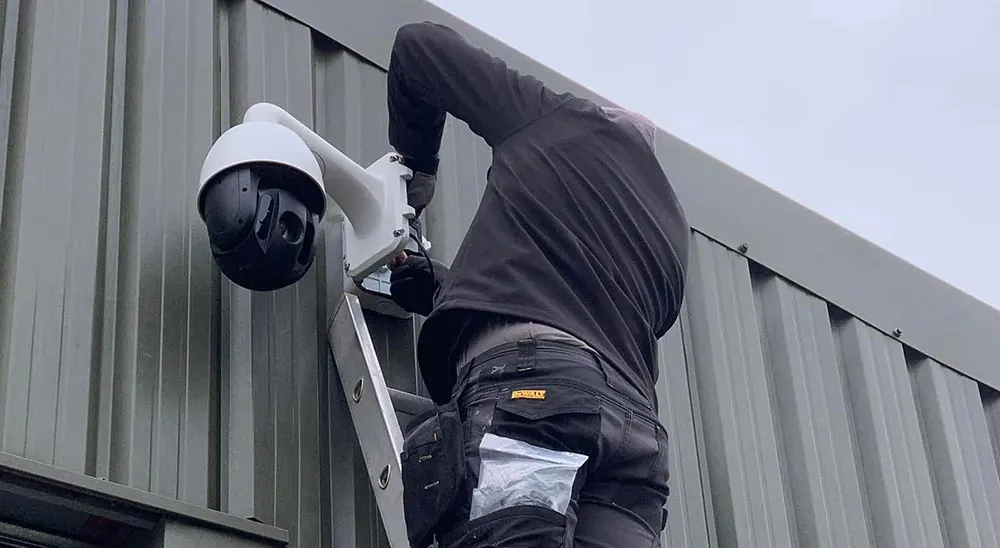
Most of the problems above come from cameras put up quickly with wide lenses aimed at whatever looked useful. When we plan a home CCTV system we start with what each camera needs to see, then choose the lens, height and angle to cover that without straying further than necessary. Privacy masks can be set up at handover, and we show you how to find and export footage.
If you already have cameras and are unsure whether they look too far beyond your boundary, we can review the views and suggest changes. Call our Mildenhall team or send an enquiry through the contact page.
Source: Information Commissioner's Office guidance on domestic CCTV, checked November 2026.
Have a question about your own property? Contact our Mildenhall team.
FAQs
Frequently asked questions
Want advice for your own home or business?
Call our Mildenhall team or send an enquiry and we will talk through the options.
Enquiries
Ask us a question or get a quote
Tell us a little about your property and what you need. We will get back to you to talk it through.
- 01638 515551
- info@solarsat.co.uk
- Phones and email Monday to Saturday, 8:30am to 6pm
- 8 High Street, Mildenhall, Suffolk IP28 7EQ. Showroom visits by appointment.