
Solarsat guide
Planning alarm protection for garages and outbuildings
A detached garage or workshop often has different access, construction and connectivity from the main home. An effective plan starts by understanding what is stored there, how people use the space and what technical links can be made reliably. Include the distance between buildings, materials stored inside and any seasonal changes in use. These details can affect detection, communications and the choice of equipment. Ask how an activation will be reported when nobody is at the main property, and who is expected to take the next step. It is also worth agreeing how access will work for occasional contractors. Include this information in the handover so future users understand the intended operation. This also makes future troubleshooting easier. This supports a clear service history.
Phones and email Monday to Saturday, 8:30am to 6pm. Showroom visits by appointment.
Start with use and access
List the openings and routes into each structure, including vehicle doors, personnel doors and windows. Note which are used every day and whether tools, bicycles, machinery or stock are kept inside. A building used for occasional storage may need a different setting routine from a workshop entered repeatedly during the day.
Think about how the alarm will behave when the main property is occupied. Users may want to protect an outbuilding independently, or include it in a shared system with a separate area. Discuss who needs access and how codes or credentials will be managed. Clear zoning can reduce confusion when someone uses one building while another remains secured.
Construction and detection choices
Outbuildings vary from insulated garages to lightweight sheds with uneven surfaces and exposed fittings. Temperature changes, dust, condensation and vibration can influence equipment suitability. A survey should check mounting surfaces, likely movement routes and whether a contact, movement detector or another arrangement can operate consistently in the conditions.
Choose detection around the likely entry method and the way the building is used. A large vehicle door may need a suitable opening contact, while movement detection can cover an internal route. Avoid placing sensors where stored items will regularly block them. If layouts change with the seasons, leave enough practical flexibility and let the installer know.
Power and communications
A detached building may not have a convenient mains supply or data connection. Check the available power, the route between buildings and the reliability of wireless communication before deciding on equipment. A signal that works with an open door during a brief test may behave differently once doors are closed or stored goods are in place.
Where remote alerts or monitoring are required, confirm how the system communicates and what happens if a link or power source fails. Any batteries or backup arrangements need suitable maintenance. Do not assume a domestic Wi-Fi signal reaches a distant shed; ask for an assessment of the actual route and the options for a dependable connection.
Alarm, cameras and lighting
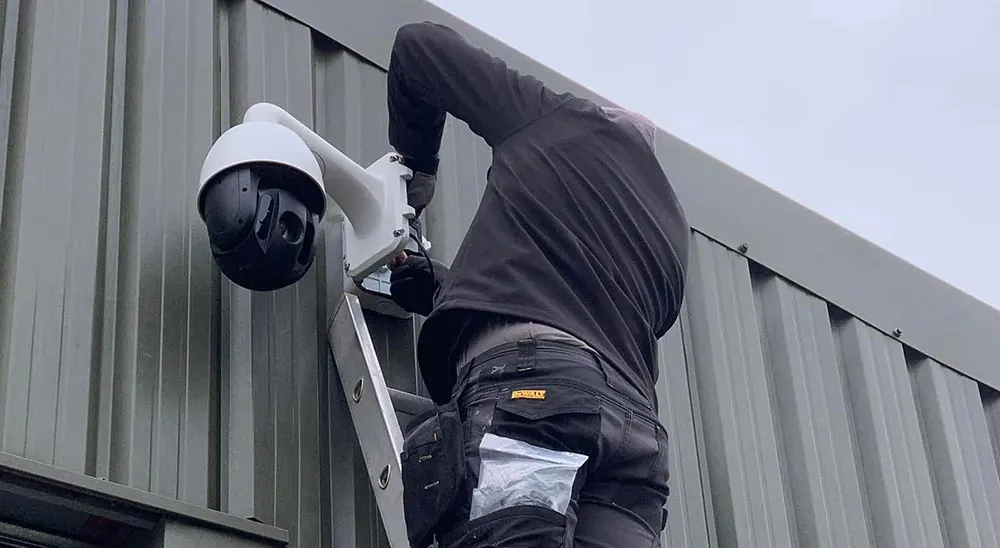
An alarm can report a disturbance, while a camera may help an authorised user review activity. These functions are complementary, not substitutes. Consider camera views of approach routes and entrances, lighting at night, privacy around neighbouring land and the practical process for reviewing recordings. Set expectations about image quality and connectivity before installation.
If cameras are included, decide who can view footage and how access is protected. Recording settings and retention should be proportionate to the purpose, with particular care where people outside the household or business may be captured. The installer can help with physical placement and system operation, while the owner remains responsible for appropriate use and notices where required.
Operating and maintaining the system
Make setting and unsetting simple enough that the system is used consistently. Show regular users how to operate the correct area, recognise a fault and report an unexpected activation. Keep access credentials individual where supported and remove them when a contractor or former user no longer needs entry.
Check the system after significant building work, changes to stored equipment or alterations to power and network arrangements. Follow the recommended service schedule, inspect visible damage and promptly investigate repeated faults. A short written record of changes and activations can help an installer diagnose problems and keep protection aligned with how the outbuilding is actually used.
Before choosing sensors for a detached garage, workshop or barn, check how temperature swings, dust, draughts and spiders might affect standard indoor detectors. Dual-technology motion sensors, heavy-duty roller-shutter contacts and weather-sealed cable entries handle unheated spaces far better than domestic room sensors, while a reliable wired or long-range wireless link back to the main panel keeps alerts prompt.
Have a question about your own property? Contact our Mildenhall team.
Related services
Services this guide covers
Intruder alarms
Off-the-shelf and custom smart alarm systems with app control, optional 24/7 monitoring and ongoing maintenance.
Find out more
Monitored alarm systems
Smart intruder alarms with optional 24/7 monitoring, so alerts are followed up by trained professionals even when you cannot respond.
Find out moreCCTV
IP CCTV with 24/7 colour images, two-way audio and smartphone alerts for homes, businesses and farms.
Find out more
FAQs
Frequently asked questions
Want advice for your own home or business?
Call our Mildenhall team or send an enquiry and we will talk through the options.
Enquiries
Ask us a question or get a quote
Tell us a little about your property and what you need. We will get back to you to talk it through.
- 01638 515551
- info@solarsat.co.uk
- Phones and email Monday to Saturday, 8:30am to 6pm
- 8 High Street, Mildenhall, Suffolk IP28 7EQ. Showroom visits by appointment.