
Solarsat guide
Background music systems for shops, cafes and salons
A well-planned music system can make a commercial space feel welcoming without competing with conversation or staff duties. The right setup starts with how the premises are used, not simply how many speakers can be fitted.
Phones and email Monday to Saturday, 8:30am to 6pm. Showroom visits by appointment.
Begin with the atmosphere and the floor plan
Think about the experience you want customers to have at different times of day. A quiet salon may need gentle, even sound that supports conversation, while a busy cafe may benefit from a livelier feel in customer areas. Staff spaces, treatment rooms and places where customers wait can have different requirements, so note how each area is occupied before choosing equipment.
A floor plan helps identify ceilings, shelving, counters, seating and areas where people need to hear one another clearly. The aim is usually consistent coverage at a modest level rather than a few loud speakers aimed across the room. Include opening hours, cleaning routines and any planned changes to the layout in your brief.
Choose speaker positions for even coverage
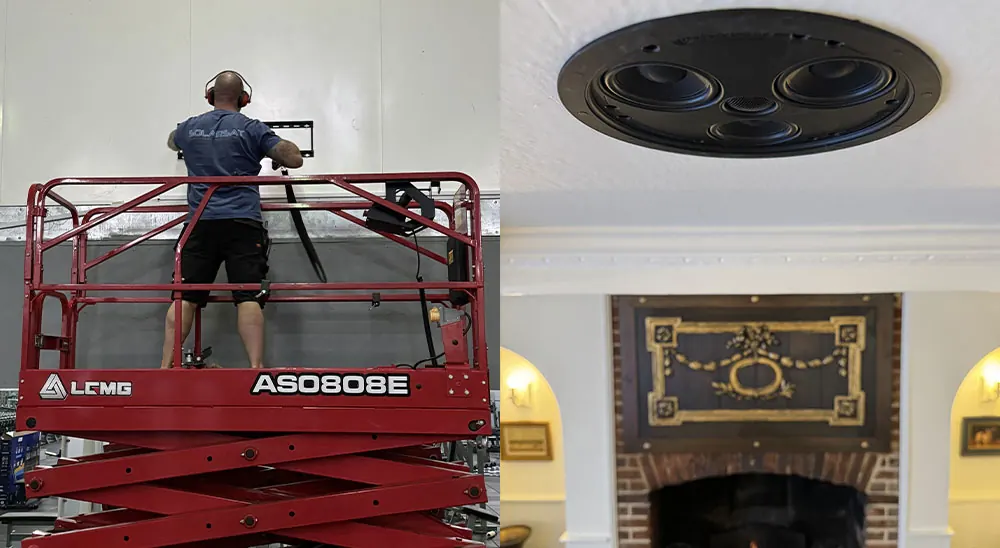
Ceiling speakers can suit many indoor spaces because they distribute sound from above and keep equipment out of the way. Their position and spacing should reflect ceiling height, surface type and the shape of the room. In a long, narrow shop or a space divided by shelving, a simple grid may not produce the same result as a layout designed around those obstructions.
Wall-mounted speakers can be useful where ceilings are unsuitable or where sound needs to be directed towards a defined listening area. A competent installer will consider fixing points, cable routes and the effect of nearby reflective surfaces. In customer-facing spaces, discreet equipment can help preserve the appearance of the interior while remaining accessible for future maintenance.
Make controls simple for the team
Staff should be able to make everyday adjustments without needing specialist knowledge. Consider who is permitted to change volume, whether different areas should be controlled independently and where the controls should be located. A manager may want a simple local control behind the counter, while a multi-room venue may need separate levels for customer seating and quieter work areas.
Reliable operation also depends on sensible source selection and clear handover. Agree how the system will be switched on and off, what happens when the source is unavailable and whether the business needs a scheduled routine. Keep control instructions accessible to the people who open and close the premises, and avoid giving unnecessary access to settings that could disrupt normal use.
Plan wiring, power and future changes
An installation plan should account for cable routes, access above ceilings, existing electrical provision and any building restrictions. Discuss the work with the person responsible for the premises, particularly if ceilings are protected, shared or difficult to access. Neat routing and labelled connections can make future fault-finding or equipment changes less disruptive.
Consider whether the business may add rooms, alter seating or expand into another unit. It may be practical to leave capacity for additional zones, but this depends on the system design and site conditions. A survey can clarify what is feasible and identify any work that should be coordinated with other trades or scheduled outside customer hours.
Keep the sound appropriate and the system maintained
Background music should remain comfortable for customers and staff. Set levels with the room occupied where possible, because furnishings and people affect how sound is perceived. Establish a sensible maximum level and check that staff can still communicate safely. If the premises have specific noise or licensing obligations, the business should confirm those requirements before operation.
Routine checks can include listening for distortion, verifying that each zone works and checking that controls have not been changed accidentally. Report intermittent faults early rather than compensating by turning other speakers up. Keep a record of equipment information and installation notes so that future changes can be discussed with an installer using accurate details.
Operational and licensing considerations
For customer-facing businesses, make decisions with both visitors and staff in mind. A speaker that is pleasant near the entrance may sound too prominent at the till or consultation chair. Walk the space during different activities and note where people naturally pause, talk or need concentration. These observations help refine zone boundaries and avoid placing sound where it would be distracting.
If the business plays music from a commercial service, confirm that the intended use is covered by the relevant terms and permissions. Equipment installation does not provide music rights. The business should check its obligations with the appropriate licensing organisations and service provider before using recorded music for customers or staff.
Have a question about your own property? Contact our Mildenhall team.
Related services
Services this guide covers
Audio-visual and home cinema
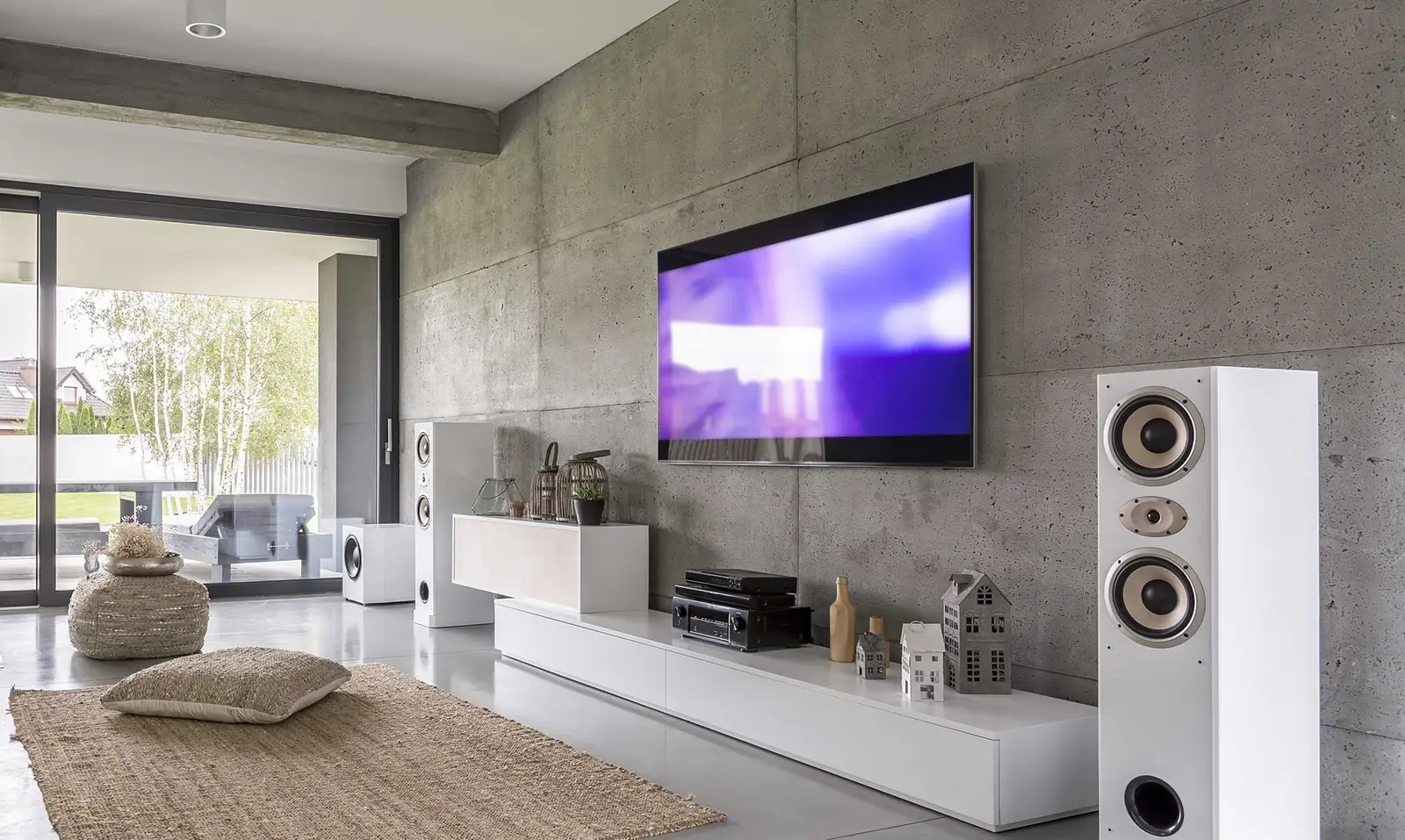
TV wall mounting, media walls, home cinema, multi-room music and commercial AV, designed and installed by our own team.
Find out more
PA system installation
Public address systems for offices, warehouses, venues and outdoor spaces, with clear announcements, zones and simple control.
Find out more
FAQs
Frequently asked questions
Want advice for your own home or business?
Call our Mildenhall team or send an enquiry and we will talk through the options.
Enquiries
Ask us a question or get a quote
Tell us a little about your property and what you need. We will get back to you to talk it through.
- 01638 515551
- info@solarsat.co.uk
- Phones and email Monday to Saturday, 8:30am to 6pm
- 8 High Street, Mildenhall, Suffolk IP28 7EQ. Showroom visits by appointment.