
Solarsat guide
CCTV storage: choosing local recording or cloud
A sharp live picture does not prove that useful footage will still be available when you need it. Storage design determines what is recorded, how long it survives and how reliably you can retrieve it. Start with the recording task and your connection, then choose the recorder, drives and any cloud service around those requirements.
Phones and email Monday to Saturday, 8:30am to 6pm. Showroom visits by appointment.
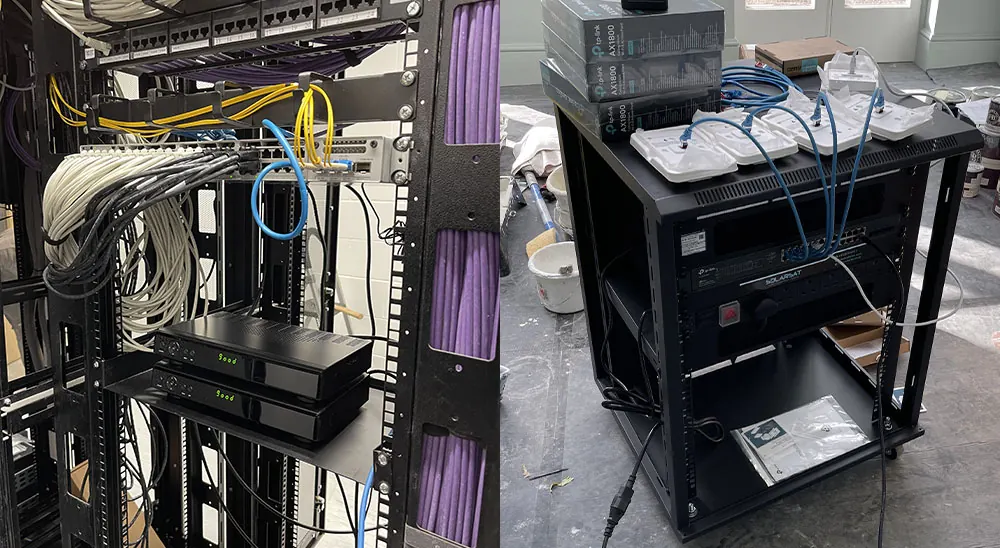
Separate the recorder from the storage medium
An NVR, or network video recorder, typically receives video from IP cameras over a network. A DVR, or digital video recorder, typically works with compatible analogue cameras connected by coaxial cable. Hybrid equipment exists, so check the supported camera types and recording limits rather than assuming that every existing camera will work with a replacement box.
A hard drive is the storage medium inside many recorders, not a competing category of recorder. Cloud recording sends supported video or clips to a provider's remote infrastructure. Some systems combine local and cloud storage, while others use memory cards in cameras. Ask exactly where the full-quality recording resides and what each app view represents. A cloud account used only for remote viewing does not necessarily mean recordings are stored off site.
Calculate capacity from real recording settings
Retention depends on usable storage capacity, camera count, resolution, frame rate, compression and actual video bitrate. More detail and more cameras generally increase demand, but codec settings and scene complexity also matter. A busy entrance with moving foliage can generate different data volumes from a quiet indoor corridor. Treat a fixed promise of recording days without stated assumptions cautiously.
Use the camera and recorder specifications to produce an initial storage estimate, then verify it against real recordings after commissioning. Allow for the recorder's supported drive sizes, number of drive bays and recording throughput. Higher capacity alone cannot cure a recorder that cannot process the incoming streams. Reducing frame rate or changing compression may extend retention, but check playback quality and compatibility before accepting the trade-off. The aim is useful evidence, not simply the longest possible timeline.
Choose suitable drives and recording rules
Use surveillance-rated drives approved or supported for the recorder's workload and model. These are intended for sustained recording duties, but they still need correct installation, cooling and health checks. A desktop drive that physically fits is not automatically a suitable substitute. Multiple drives do not automatically provide resilience; the recorder must support and be configured for the intended storage arrangement.
Continuous recording gives a more complete timeline but uses storage steadily. Motion or event recording can reduce usage, although shadows, insects and rain may trigger extra clips, while poor detection settings can miss an approach. Check pre-event and post-event recording where supported. Most systems can overwrite the oldest footage when full; confirm that this is enabled if intended. Protected or locked clips may reduce available space, so include them in routine checks.
Check cloud uploads and remote access separately
Cloud recording depends on available upload bandwidth, not just the broadband download speed advertised. Multiple cameras can compete with video calls and other traffic. Establish whether the service uploads continuously, sends event clips or backs up selected recordings. Ask what happens during an internet outage, whether a local buffer exists and whether missing recordings upload later. Capabilities vary by product and subscription.
Subscriptions may determine retention, supported cameras, features and access to historical recordings. Check the consequences of cancellation or a service change, along with export options. Local recording can continue without internet on suitable systems, but remote access will normally be affected. Conversely, remote viewing does not create a backup by itself. Use secure supported access methods, protect accounts and avoid exposing recorder administration directly to the internet merely to make phone viewing work.
Practise exports and limit unnecessary retention
Test an export before an incident occurs. Find a short time range, include the relevant cameras and confirm that the resulting file plays on another device. Some native formats need a supplied player, while a common video format may be easier to share. Preserve the original export where appropriate and record which camera, date and time it covers. Verify the system clock, time zone and seasonal clock changes.
Keep important incident clips in a separate, access-controlled location rather than trusting the rolling recording archive. A second copy can protect against recorder theft or drive failure, but synchronised deletion or a shared account can undermine that protection. Set a justified retention period for ordinary footage and review exported copies separately. Longer storage is not automatically better: it increases the material that needs managing and protecting without necessarily improving the recording task.
Avoid storage assumptions and commission properly
Frequent mistakes include buying capacity before setting the camera workload, assuming every motion event is captured and never checking whether a failed drive has stopped recording. Review alerts, free space and sample playback routinely. Recheck retention after adding cameras or changing image settings. Keep the recorder ventilated and physically secure, with maintenance access that does not require dismantling the installation.
Use a professional when integrating existing cameras, designing multi-camera uploads or planning resilience for important premises. Ask for documented recording settings, measured retention once sufficient footage exists and a demonstration of recovery after a connection interruption. Discuss whether suitable backup power would support the cameras, network and recorder together. At handover, confirm who monitors faults, who holds administrator access and how support works. A storage plan is only dependable when someone knows how to check it.
Have a question about your own property? Contact our Mildenhall team.
Related services
Services this guide covers
CCTV
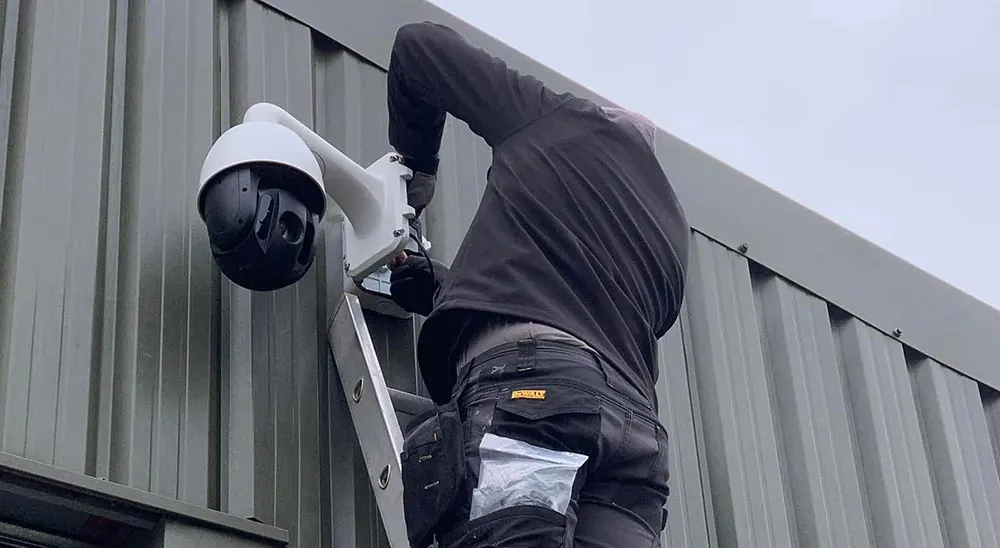
IP CCTV with 24/7 colour images, two-way audio and smartphone alerts for homes, businesses and farms.
Find out more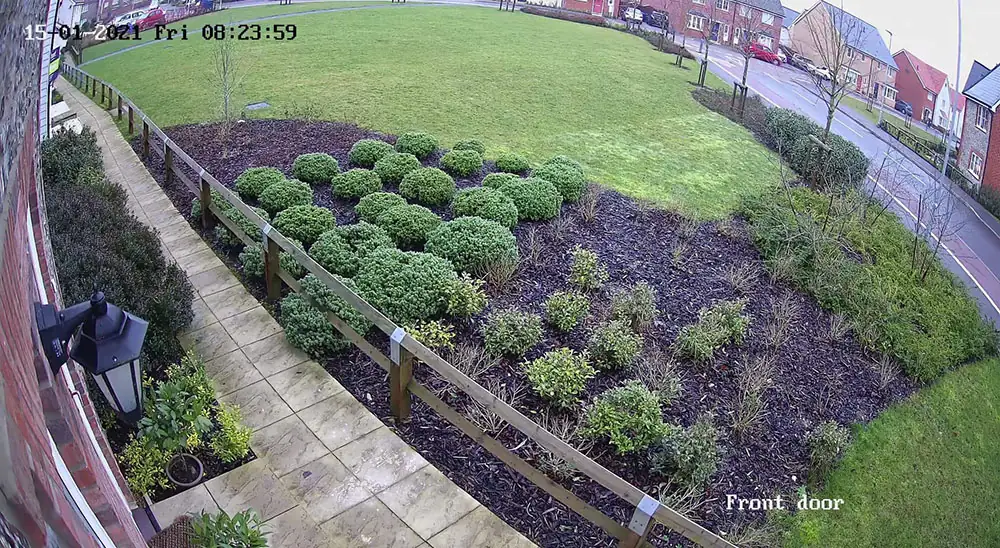
Home CCTV installation
Cameras for front doors, drives, side gates and gardens, with phone viewing, alerts and two-way audio.
Find out moreData and network cabling
Wired network sockets, data cabinets and structured cabling for offices and homes, planned for growth and easy to maintain.
Find out more
FAQs
Frequently asked questions
Want advice for your own home or business?
Call our Mildenhall team or send an enquiry and we will talk through the options.
Enquiries
Ask us a question or get a quote
Tell us a little about your property and what you need. We will get back to you to talk it through.
- 01638 515551
- info@solarsat.co.uk
- Phones and email Monday to Saturday, 8:30am to 6pm
- 8 High Street, Mildenhall, Suffolk IP28 7EQ. Showroom visits by appointment.