
Solarsat guide
How to hide TV wires safely on any wall
Trailing black cables down a freshly painted wall spoil the look of a wall-mounted television. There are several clean ways to conceal them, but the right method depends on your wall construction and UK electrical safety rules.
Phones and email Monday to Saturday, 8:30am to 6pm. Showroom visits by appointment.
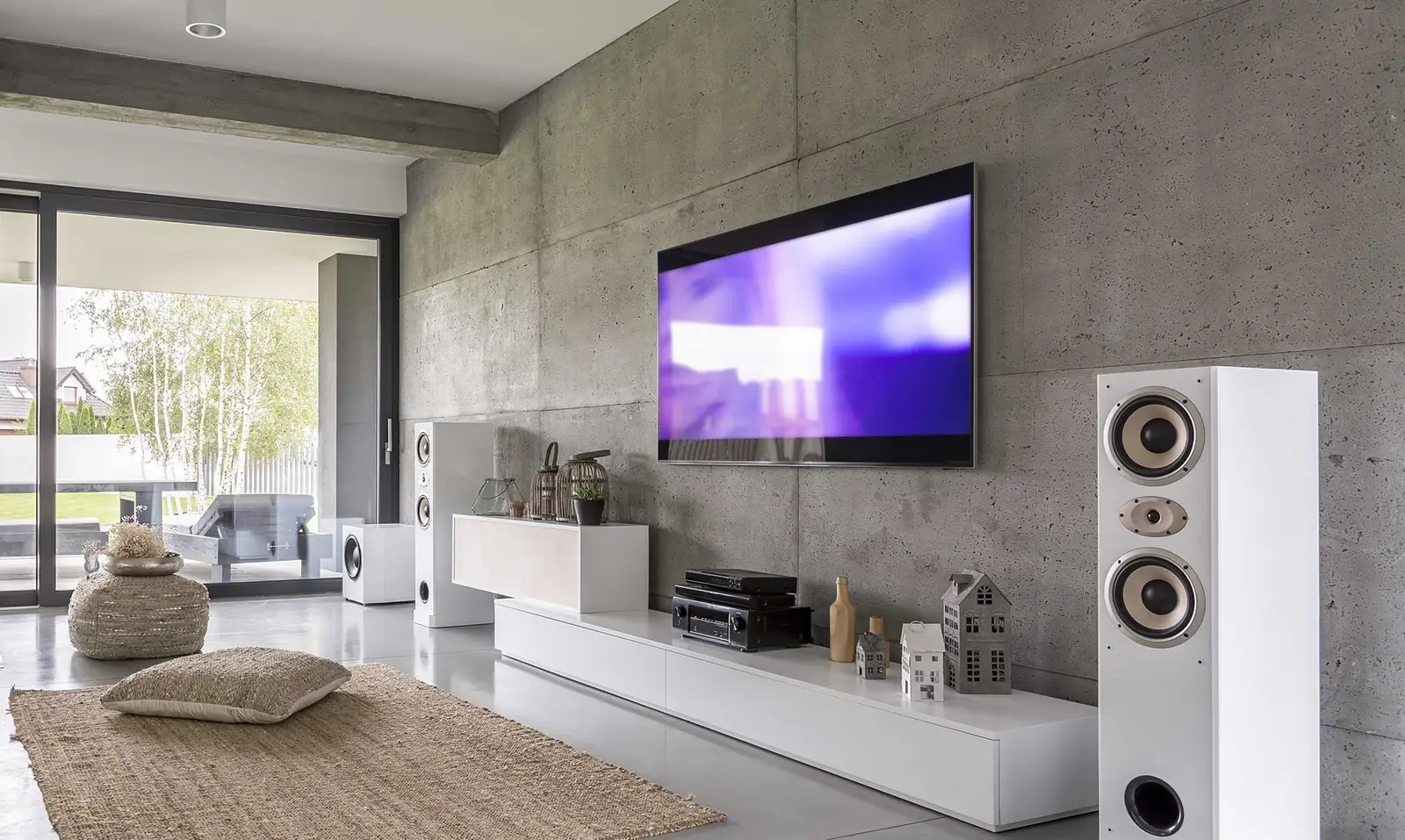
Start by listing every cable the TV needs
Before cutting into plaster or buying trunking, write down every lead that connects to the screen. Most setups need a mains power cable, one or two HDMI leads for a games console or TV box, an aerial or satellite coax cable, and often a wired network cable for reliable streaming.
If you use a soundbar, you will also need an HDMI eARC or optical cable plus power for the bar. Adding one spare HDMI cable while the route is open costs very little and saves reopening the wall if you add another box later.
Option 1: paintable surface trunking
Half-round or D-shaped trunking stuck or screwed neatly down the centre line beneath the television is the quickest, lowest-disruption choice. It works on any wall, including rented homes where you cannot cut into plaster.
Once painted in the same emulsion as the wall, slim trunking blends in far better than loose cables. Choose a size with enough internal depth for HDMI plugs and keep power and signal leads tidy inside.
Option 2: routing cables inside a stud wall
Hollow plasterboard stud walls make cable concealment straightforward when there is a clear vertical cavity between the television and the furniture below. An installer cuts two neat openings, fits brush faceplates at top and bottom, and drops the low-voltage signal leads through the void.
Watch out for horizontal timber noggins between the vertical studs. If a noggin sits halfway down the wall, cables cannot simply drop past it without drilling through the timber or opening a small access pocket to patch afterwards.
Important electrical safety rule: you must not run a television's standard flexible mains lead loose inside a wall cavity. Instead, a qualified electrician should fit a fused spur or recessed mains socket directly behind the television, wired in fixed twin-and-earth cable in the permitted safe zones.
Option 3: chasing a solid brick or block wall
On a solid masonry wall, hiding cables completely means cutting a vertical channel into the plaster and brickwork, fitting a conduit or capping channel, and plastering back over the top. This creates a completely invisible finish once decorated.
Chasing is dusty work and requires making good and repainting, so it is best timed before decorating or during a wider room refresh. Keep the chase shallow enough not to weaken the wall, and use a smooth conduit wide enough to pull a replacement HDMI lead through in future.
Option 4: building a false wall or media wall
If you have a solid external wall or a chimney breast that you do not want to chase, a timber stud frame built out slightly from the existing wall gives a generous void for cables, sockets and even recessed shelves or a soundbar alcove.
A planned media wall also lets you keep boxes out of sight in a ventilated cupboard or low cabinet, with infrared repeaters or smart control so remotes still work cleanly.
What affects the cost and common mistakes to avoid
Cost depends mainly on the wall type and how much electrical and making-good work is needed. Fitting brush plates in an open stud wall is quick, whereas chasing masonry, moving a mains socket and replastering takes longer and may involve a decorator afterwards.
Common mistakes include burying HDMI cables directly in wet plaster without conduit, which ruins the cable and prevents future upgrades, or using short, cheap HDMI leads that fail with 4K HDR signals. Always test every cable at full resolution before closing up a wall.
Another mistake is forgetting ventilation when hiding Sky boxes, amplifiers or games consoles inside a closed cupboard. Enclosed AV gear overheats quickly unless air can circulate.
When to hire a professional
If you only want stick-on trunking, that is an easy afternoon task. Whenever you need cables routed through walls, a new mains socket behind the screen, or a media wall planned from scratch, an experienced AV installer ensures the routes are safe, serviceable and neat.
Have a question about your own property? Contact our Mildenhall team.
Related services
Services this guide covers
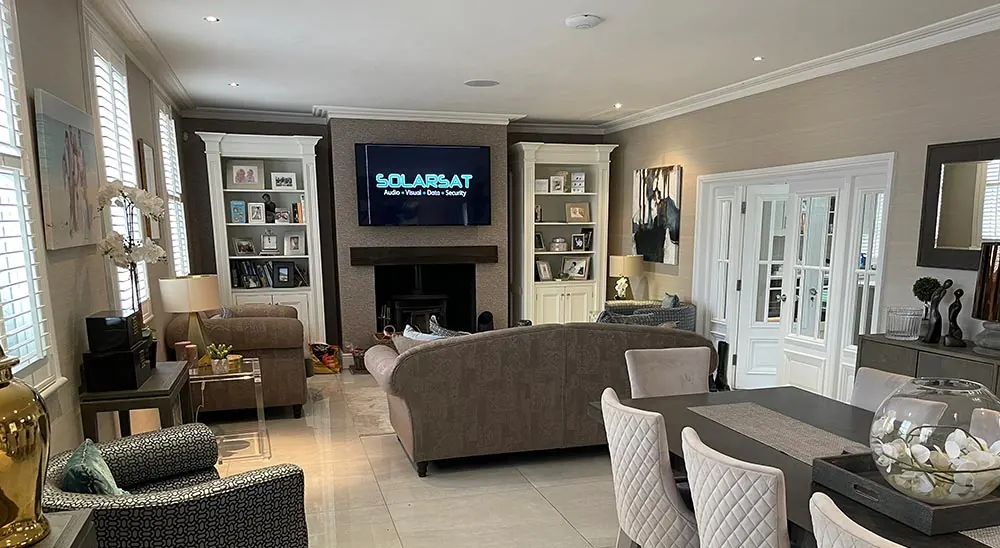
TV wall mounting
TVs fixed securely to solid, flint or plasterboard walls, with the right bracket and the cables hidden or neatly trunked.
Find out more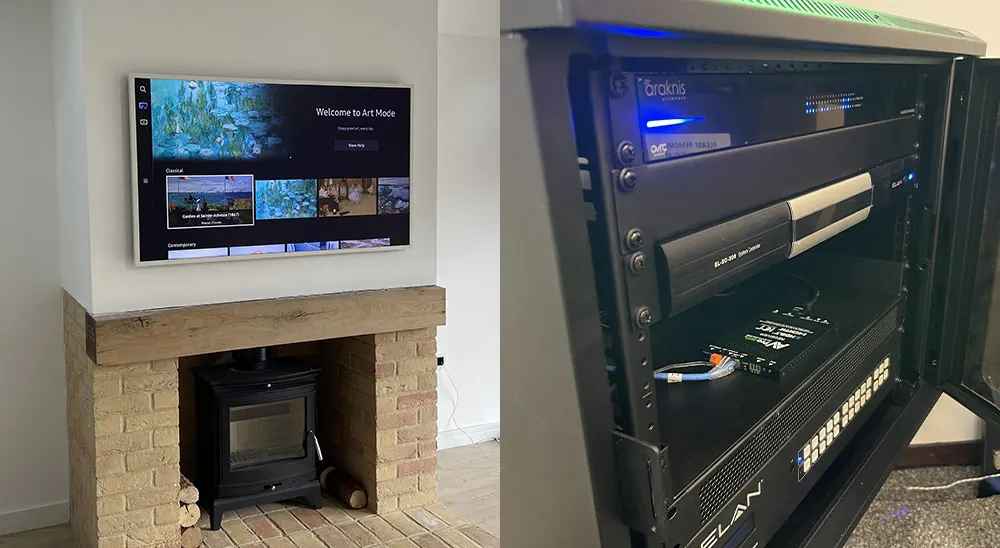
Media wall installation
AV design, wiring and installation for media walls, planned with your builder or joiner so the screen, sound and equipment fit.
Find out moreAudio-visual and home cinema
TV wall mounting, media walls, home cinema, multi-room music and commercial AV, designed and installed by our own team.
Find out more
FAQs
Frequently asked questions
Want advice for your own home or business?
Call our Mildenhall team or send an enquiry and we will talk through the options.
Enquiries
Ask us a question or get a quote
Tell us a little about your property and what you need. We will get back to you to talk it through.
- 01638 515551
- info@solarsat.co.uk
- Phones and email Monday to Saturday, 8:30am to 6pm
- 8 High Street, Mildenhall, Suffolk IP28 7EQ. Showroom visits by appointment.