
Solarsat guide
Loft aerial or roof aerial: which suits your home?
A loft aerial can keep equipment out of sight and away from the weather, while a roof aerial has a clearer view towards the transmitter. Neither position is automatically best. The right choice depends on signal strength, building materials, nearby obstructions and how many televisions need a reliable feed. Understanding those factors helps you avoid choosing on appearance alone.
Phones and email Monday to Saturday, 8:30am to 6pm. Showroom visits by appointment.
How the two positions differ
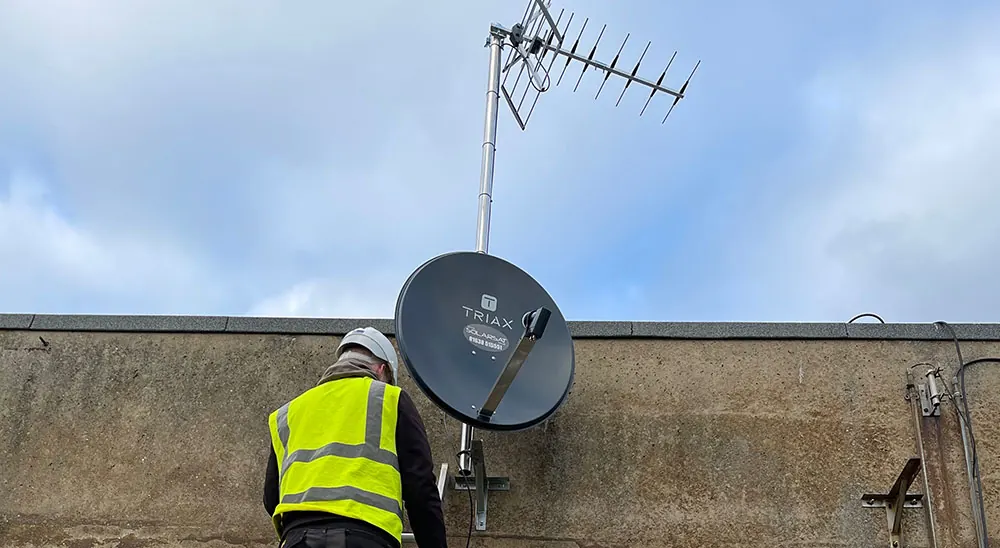
A roof aerial is mounted outside, usually on a chimney, wall bracket or purpose-made mast. Its height can improve its line of sight and reduce the effect of internal walls, roof coverings and household equipment. The aerial, cabling and fixings are exposed to wind and rain, so correct installation and suitable materials matter. Access arrangements and the condition of the mounting point should be considered before work starts.
A loft aerial sits inside the roof space. It is sheltered and may be easier to reach later, and it avoids having equipment visible on the outside of the property. However, the roof itself remains between the aerial and the transmitter. Tiles, metal components, foil insulation, water tanks and structural elements can weaken or distort reception. A loft position should be tested rather than selected simply because it is convenient.
What affects reception in a loft
Roof construction can make a substantial difference. Ordinary tiles may allow enough signal through in a favourable location, while metal coverings or foil-backed insulation can cause serious attenuation. Even where the roof material is suitable, pipes, tanks, solar equipment and large sections of framing can obstruct the useful direction. Moving an aerial a short distance or changing its orientation may improve the result, but there is no universal placement that works in every loft.
The transmitter direction and local terrain are also important. Hills, dense buildings and trees can weaken or reflect signals, creating reception that varies between rooms or channels. A scan on the television may show that channels are present, but it does not explain whether the signal has enough quality margin to cope with changing conditions. A meter can help identify signal strength and quality at the aerial and at the television outlet.
When an external aerial may be preferable
If the signal is weak inside the loft, lifting the aerial above the roofline can provide a cleaner path. An external installation may also be helpful where a building has foil insulation or where the loft position produces unstable reception. The aerial type and direction should suit the local transmitter and frequency group rather than being chosen by appearance. A larger aerial is not automatically better if it is poorly matched or aimed.
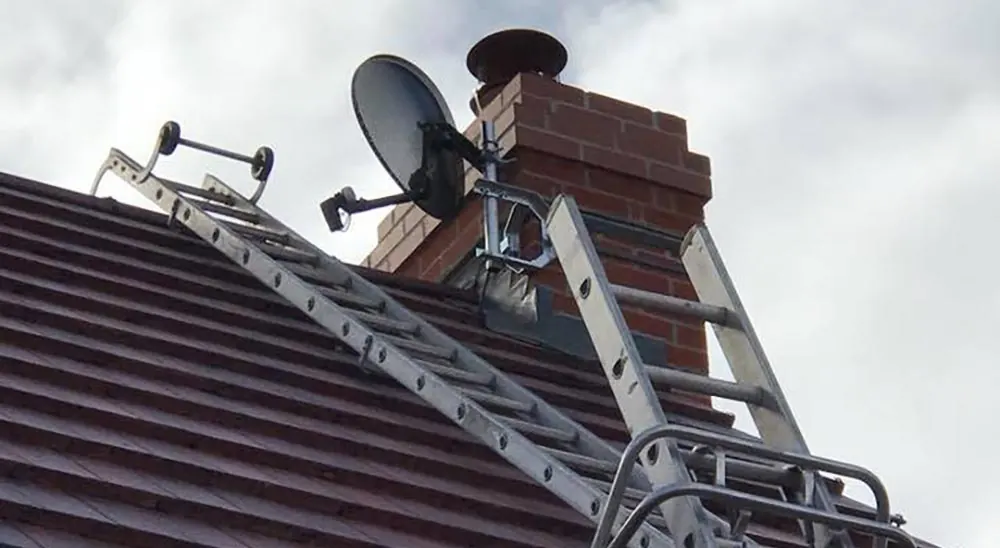
External equipment needs secure mounting and carefully routed cable. The installer should consider the condition of the chimney or wall, wind exposure, safe access and the route into the property. Coaxial cable should be protected from water entry and excessive strain, with connections kept weather resistant. If a dish or other equipment is already present, spacing and mounting positions should be planned so that one installation does not obstruct another.
Distribution, testing and future use
One aerial can feed more than one television, but splitting the signal reduces the level available at each outlet. The design should account for cable length, the number of sockets and any distribution equipment. A satisfactory reading at the aerial does not guarantee a good result in a distant room if a cable is damaged, poorly terminated or routed through unsuitable components. Testing at the outlets helps reveal where losses occur.
Think about the rooms you use now and any likely changes, such as adding a television or recording device. A planned distribution system can avoid improvised connections and make faults easier to trace. Do not add an amplifier automatically: amplification cannot restore information lost through poor reception and can overload equipment when the incoming signal is already strong. A measured design is generally more dependable than adding components until the picture improves.
Making a sensible choice
A loft aerial can be a good fit when measured reception is adequate at the proposed position and the installation can be supported securely. A roof aerial is worth considering where the roof structure or local conditions prevent a stable loft signal. Ask what was measured, whether readings were checked at the intended television points and how the cable route will be protected. These practical details explain the recommendation far better than a blanket claim that one aerial position always wins.
If reception changes with weather or particular household devices, note when the problem occurs and which channels are affected. This information can help distinguish weak incoming signal from interference, a loose connection or a distribution issue. Work at height should not be attempted without the right training and access equipment. A qualified installer can assess the structure, take measurements and explain the options before any permanent mounting is chosen.
Have a question about your own property? Contact our Mildenhall team.
Related services
Services this guide covers
FAQs
Frequently asked questions
Want advice for your own home or business?
Call our Mildenhall team or send an enquiry and we will talk through the options.
Enquiries
Ask us a question or get a quote
Tell us a little about your property and what you need. We will get back to you to talk it through.
- 01638 515551
- info@solarsat.co.uk
- Phones and email Monday to Saturday, 8:30am to 6pm
- 8 High Street, Mildenhall, Suffolk IP28 7EQ. Showroom visits by appointment.