
Solarsat guide
Is mounting a television above a fireplace right for your room?
The space above a fireplace can appear to be a natural focal point, but a television there may be too hot, too high or difficult to service. The answer depends on the appliance, wall and room layout. Check comfort and heat conditions before committing to a bracket or concealing cables.
Phones and email Monday to Saturday, 8:30am to 6pm. Showroom visits by appointment.
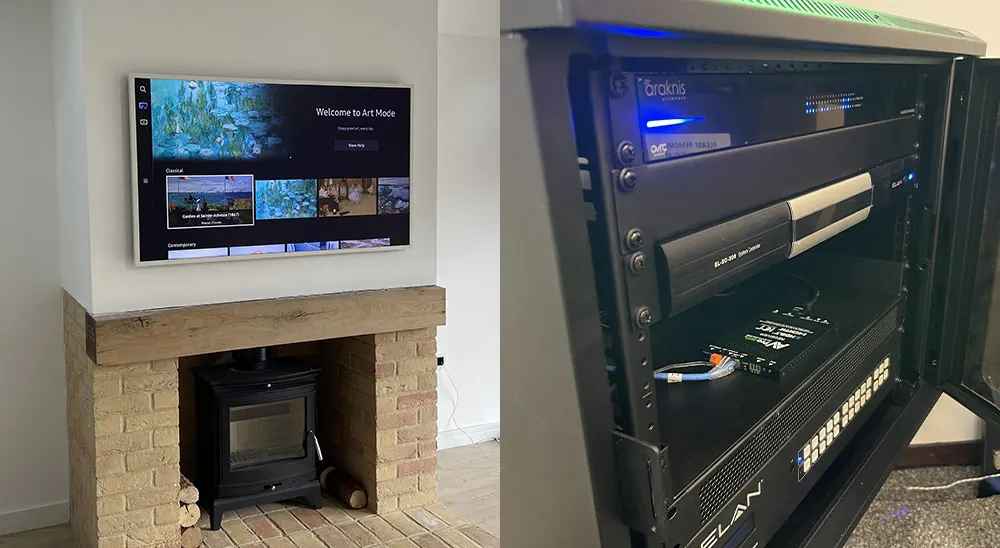
Check the fireplace and appliance guidance
First identify whether the fireplace is decorative, open, gas, electric or another type, and find the manufacturer’s installation and operating guidance. Required clearances vary by appliance and surround. A television installation must not obstruct ventilation, flues or access points, and should not conflict with the fireplace instructions.
A shelf or mantel may deflect some rising heat, but it is not proof that the screen will remain within its operating limits. The wall surface can also become warm even where the air temperature seems comfortable. Check the television maker’s stated environmental limits and the fireplace maker’s clearances.
Do not make assumptions from a brief test with the fire off or at low output. If the fireplace is used, assess conditions during ordinary operation and at the hottest normal setting allowed by its instructions. Where safe measurement or guidance is uncertain, consult an appropriate fireplace professional before proceeding.
Measure heat under realistic conditions
A thermometer can help establish how the proposed screen area behaves, but measurements must be taken safely and with the appliance operating as intended. Compare the readings with the television manufacturer’s specified operating conditions. A single reading at one point may miss a hot plume or variation across the wall.
Consider seasonal use and how long the fireplace typically runs. A short demonstration may not represent a full evening of heat accumulation. Keep the screen’s vents clear and remember that a close-fitting bracket can restrict airflow behind the set, while an arm bracket may expose it to a different air pattern.
If readings approach or exceed the equipment limits, or if the wall becomes noticeably hot, do not mount the television there. A heat shield should not be improvised as a substitute for manufacturer clearances. Repositioning the television is often the simplest way to protect equipment and preserve comfort.
Test the viewing posture from the sofa
Above-fireplace positions are often higher than a conventional television location. Sit in your usual seat and look towards a marked screen outline. If you have to lift your chin or hold your head back, the posture may become uncomfortable during a long programme, even if a tilting bracket points the picture towards you.
Use a full-size paper or cardboard outline to judge the screen dimensions and distance from the seating. Test the view from every regular seat and consider whether a soundbar or mantel will cover the bottom of the picture. A screen that looks centred over the fireplace may not be centred for viewers.
A tilting mount can improve the angle in some arrangements, but it does not lower the screen or remove glare. Make sure a tilted screen will not project too far into the room or collide with the surround. Decide on the position by trying the viewing angle, rather than assuming a bracket will compensate.
Inspect the wall and installation route
Fireplace walls can conceal a flue, chimney structure, services or varied construction. Do not drill until the wall has been assessed for hidden hazards and the appropriate fixing area is confirmed. The visible surface may be plasterboard, masonry, tile or a decorative finish, each requiring a suitable installation approach.
Check that the proposed bracket and fixings suit both the wall and television. A stone or tiled surround can be difficult to modify and may need specialist tools or experience. Avoid drilling into a flue or weakening a surround, and seek an appropriate professional assessment if the construction is unclear.
Plan the power and signal connections with access and ventilation in mind. Concealing leads near a fireplace requires particular care because heat and appliance components may affect the route. Keep cables away from hot surfaces and do not route them where they could be pinched by the mount.
Compare alternatives before fixing the screen
A side wall, media unit or low cabinet may provide a better viewing height and a cooler position. It can also make sockets and equipment easier to reach. Use tape to compare alternative screen outlines in the room before deciding that the fireplace is the only practical focal point.
If the television must share the wall, discuss whether it can sit beside the fireplace or on a purpose-designed moving mount. Any mechanism must be compatible with the wall, remain clear of heat and operate without striking the surround. A movable solution still needs safe cable management and a stable fixing.
Agree the position only after checking heat, posture, services and wall structure together. If any one of these checks raises a concern, pause and seek advice from the relevant installer. A visually symmetrical arrangement is not worthwhile if it compromises comfortable viewing or equipment conditions.
Have a question about your own property? Contact our Mildenhall team.
Related services
Services this guide covers
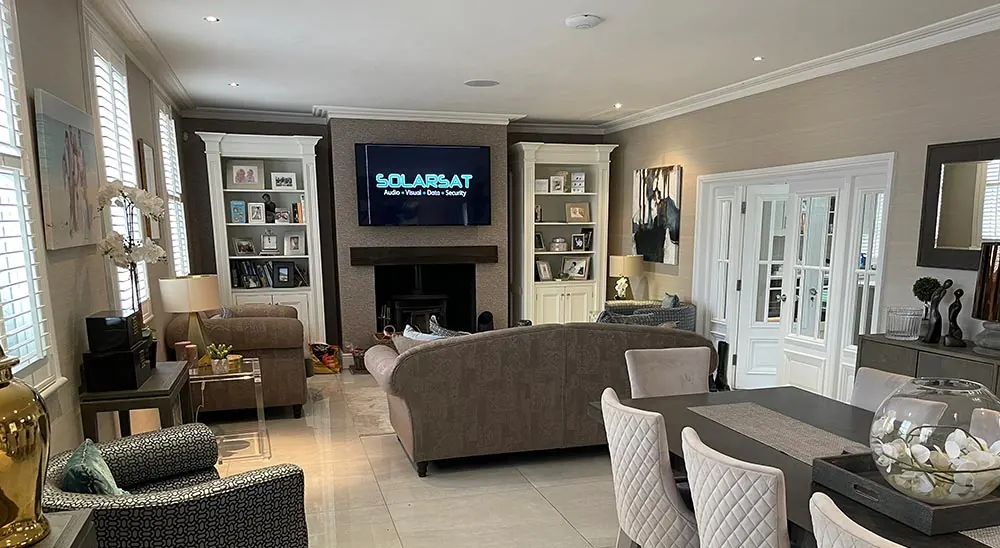
TV wall mounting
TVs fixed securely to solid, flint or plasterboard walls, with the right bracket and the cables hidden or neatly trunked.
Find out moreMedia wall installation
AV design, wiring and installation for media walls, planned with your builder or joiner so the screen, sound and equipment fit.
Find out more
FAQs
Frequently asked questions
Want advice for your own home or business?
Call our Mildenhall team or send an enquiry and we will talk through the options.
Enquiries
Ask us a question or get a quote
Tell us a little about your property and what you need. We will get back to you to talk it through.
- 01638 515551
- info@solarsat.co.uk
- Phones and email Monday to Saturday, 8:30am to 6pm
- 8 High Street, Mildenhall, Suffolk IP28 7EQ. Showroom visits by appointment.