
Solarsat guide
Moving a satellite dish for building work
Scaffolding, roof repairs and extensions can make an existing dish inaccessible or obstruct its view. Planning a move before work starts can help protect the equipment and avoid leaving the household without a usable signal while contractors are on site.
Phones and email Monday to Saturday, 8:30am to 6pm. Showroom visits by appointment.
Coordinate the work early
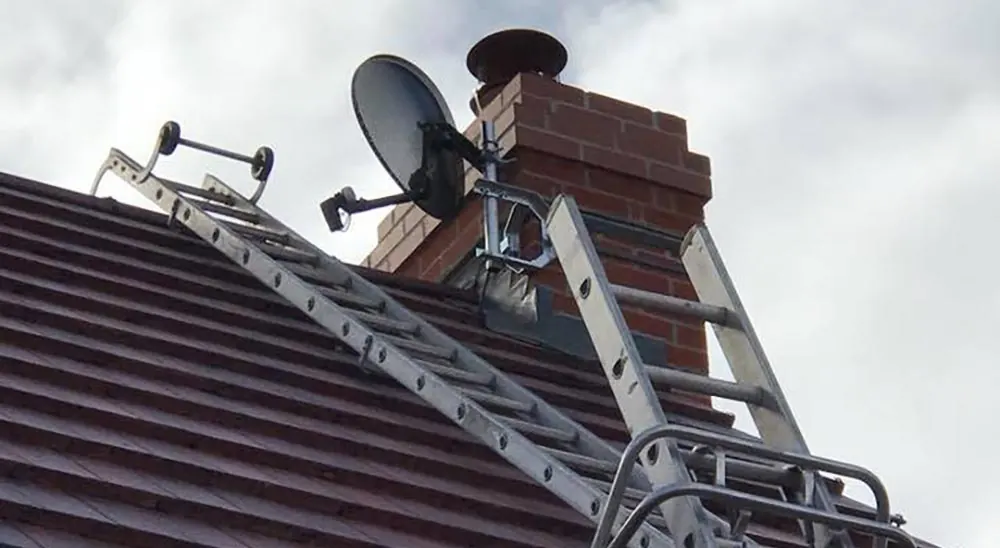
Tell the building contractor that a satellite dish is attached to the property and explain which rooms rely on it. If scaffolding will cover the dish or roof work affects its mounting point, arrange an assessment before the scaffold is erected where possible. Early notice gives the installer time to consider access, a temporary position and the likely cable route.
Agree who is responsible for handling the dish. Building teams may need it moved to reach a wall or roof, but disconnecting and refitting it without checking alignment can leave reception unreliable. Establish the sequence with the relevant trades and avoid leaving a dish loose on a scaffold or roof. Keep the receiver and cables protected from dust and accidental damage during construction.
Ask for a clear understanding of what happens to the original holes or bracket if the former fixing point is no longer used. The building contractor may need to repair or finish that area, while the installer can advise on removal of the satellite hardware. Agreeing this division of work in advance helps leave the exterior weatherproof and orderly.
Choose a suitable new position
A new location needs a clear view towards the satellite and a sound surface for secure fixings. A position that avoids scaffolding today may be blocked by the finished extension, a future roofline or mature planting. The installer should consider the completed building rather than selecting a spot solely for convenient access during construction.
External appearance and access also matter. Discuss whether the dish can be placed on a less prominent elevation without compromising reception, and check that it will remain reachable for future maintenance. The ideal point may not be immediately beside the old one. A practical route for the cable and a secure mount are part of the decision, not finishing details to be considered later.
Protect signal and wiring
Before disconnecting equipment, note the existing cable route and receiver connections. Cable may need extending or replacing if the new position is farther away, but joins should not be improvised or left exposed to rain. External penetrations need appropriate weatherproofing, and internal routes should be planned to avoid avoidable surface damage or trip hazards.
Dish alignment is precise, so reusing the old mounting marks does not guarantee a good signal after a move. A qualified installer can secure the bracket, align the dish and check reception at the receiver. The work should include attention to connectors and cable condition. If reception serves multiple rooms or receivers, explain that before the relocation so all feeds can be considered.
Temporary removal or relocation
Sometimes the dish can remain in place until a particular stage of the project, while other jobs require it to be removed beforehand. Ask the contractor when the wall or roof will be worked on and whether the equipment can be stored safely. A disconnected dish should not be left where it can be bent, dropped or exposed to damage from materials and tools.
A temporary move can be useful when the final mounting point cannot be prepared until construction is complete. However, each move involves secure fixing, a suitable view and a safe cable connection. Decide whether temporary reception is needed and what equipment must remain operational. Agree dates for removal and reinstatement so the dish is not forgotten at project handover.
Permissions, testing and handover
If the home is rented, obtain the owner's approval before changing the external installation or drilling new holes. In a shared building, check the relevant management arrangements. For a property with planning or conservation constraints, confirm whether the proposed location needs approval before work proceeds. The building contractor may not be responsible for these permissions or for restoring television reception.
After the dish is relocated, check the picture and receiver status across the services normally used. Make sure cables are clipped securely and the entry point is sealed, then ask for any changed routing to be explained. Record where the new cable runs and retain any receiver settings information. A clear handover helps identify whether a later fault relates to the relocation or another part of the system.
Have a question about your own property? Contact our Mildenhall team.
Related services
Services this guide covers
Satellite TV
Freesat, Sky and AFN installations, multi-dwelling systems and callout diagnostics for signal problems.
Find out moreSky dish installation
New Sky dishes, replacements and realignment, with feeds to extra rooms and fault finding when the picture drops out.
Find out more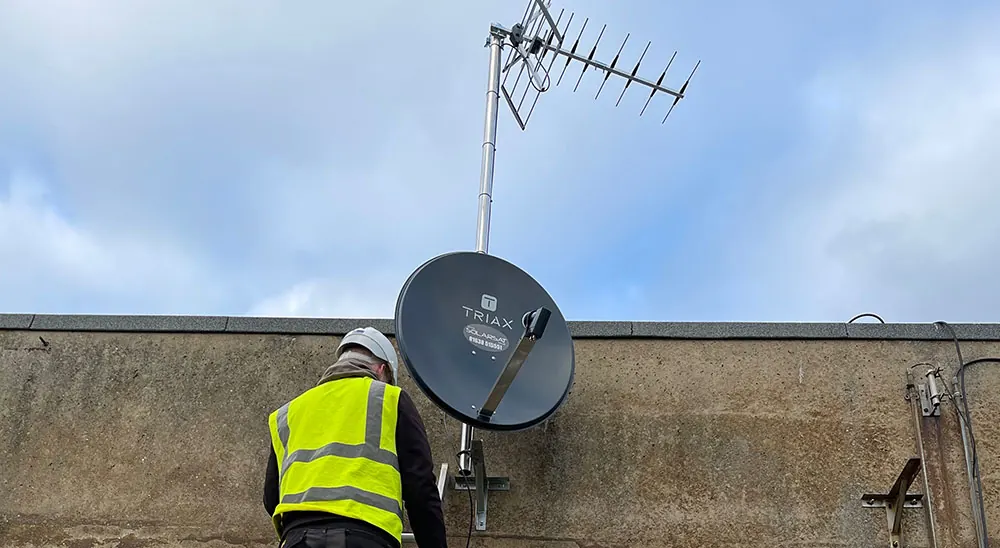
Freesat installation
Subscription-free satellite TV dishes, installed and aligned, with feeds to each room and your aerial combined on one plate.
Find out more
FAQs
Frequently asked questions
Want advice for your own home or business?
Call our Mildenhall team or send an enquiry and we will talk through the options.
Enquiries
Ask us a question or get a quote
Tell us a little about your property and what you need. We will get back to you to talk it through.
- 01638 515551
- info@solarsat.co.uk
- Phones and email Monday to Saturday, 8:30am to 6pm
- 8 High Street, Mildenhall, Suffolk IP28 7EQ. Showroom visits by appointment.