
Solarsat guide
Removing an old TV aerial or satellite dish safely
An unused aerial or dish can look like a straightforward removal, but equipment is often fixed high above ground and may have weathered mounts, hidden cables or fragile roof materials. Safe removal starts with assessing access and the structure, not simply undoing visible bolts. Planning also helps prevent water entering through old cable routes and ensures that redundant equipment is disposed of sensibly.
Phones and email Monday to Saturday, 8:30am to 6pm. Showroom visits by appointment.
Assess the installation first
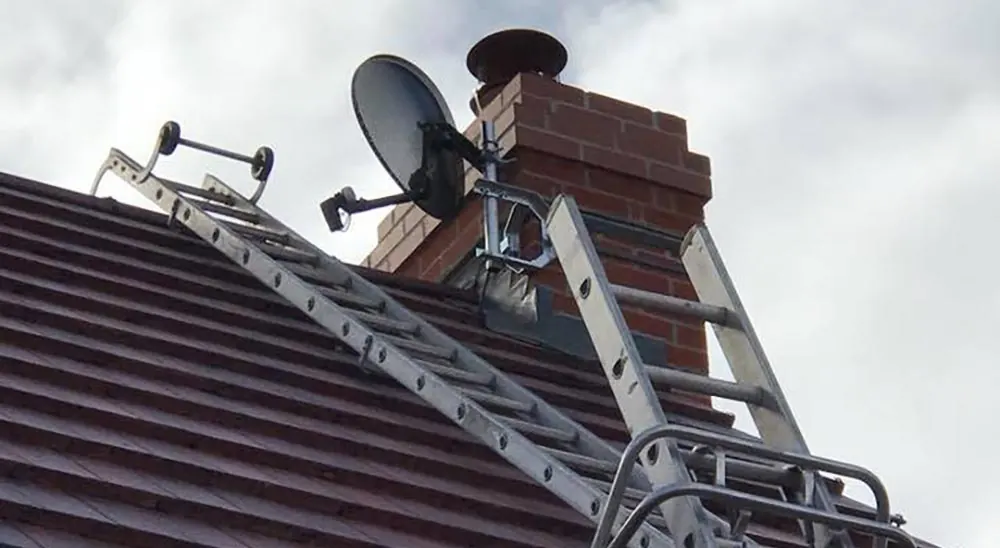
A roof installation may include an aerial, mast, brackets, satellite dish, cable clips and earthing or bonding components. Some parts can be hidden behind roof edges or routed into a loft. Establish whether the equipment is genuinely redundant before work begins; another room, receiver or future occupant may still depend on it. If the property is shared or rented, confirm permission and responsibility before altering external equipment.
Look for signs of corrosion, loose fixings, cracked tiles or movement around a chimney bracket. A mast can shift suddenly when a fixing is released, especially if wind has stressed it over time. Do not climb onto a roof or lean out of an upper-floor window to inspect it. A professional can assess the mounting and choose an access method suited to the building and the equipment's condition.
Safe access and removal
Working at height carries a serious fall risk, and ladders are not a substitute for suitable access equipment and training. Roof surfaces can be slippery or fragile, and chimney masonry may not be sound enough to support a person or a bracket. Removal should be planned so that tools and components cannot fall onto people, vehicles or neighbouring property. The work area below may need to be kept clear.
Aerials and dishes can catch the wind, so a large component may be awkward to control even after its fixings are loosened. The installer should support the assembly, remove it in manageable stages and avoid damaging tiles, flashing or masonry. If the mounting is unstable, stop and reassess rather than forcing it. Safe handling is particularly important where an older mast has seized or corroded fixings.
Cables, holes and weatherproofing
Trace coaxial cables before cutting or removing them. A cable that appears unused outdoors might feed a socket or distribution point elsewhere in the building. Disconnect it from associated equipment where practical, and remove redundant lengths only when the route is understood. Avoid leaving loose cable ends exposed to rain, since water can travel along the cable and enter a wall or loft space.
After the mount is removed, inspect the fixing points and cable entry. Any opening through a roof or wall needs a suitable repair that preserves the weather barrier. The right method depends on the surface, flashing and construction; a temporary seal may not be adequate for a roof penetration. Where removal reveals damage or water ingress, arrange appropriate repair rather than concealing the problem beneath a new cover.
Reuse and disposal
Separate metal components, cable and electronic equipment where local facilities allow. A dish reflector, steel mast and brackets may be recyclable, while receivers and powered devices should follow electrical waste arrangements. Do not leave long sections of cable, sharp brackets or fixings where they can injure someone. If equipment remains in good condition, consider whether it can be reused, but do not assume that old hardware suits a new system.
Keep the work area tidy and check that all removed items have been accounted for. If the equipment is part of a shared installation, agree what can be removed and communicate any service interruption to affected occupants. A brief record of the work, including any cable or mounting points left in place, can help a future owner or installer understand what remains.
Choosing a professional removal
Ask how the installer will access the equipment, protect the property and manage the removed components. Confirm whether cable removal and making good are included, since these can be separate tasks. The exact scope should identify whether holes will be sealed, roof repairs are required or only the aerial and dish assembly will be taken down. Clear expectations help avoid leaving an exposed cable or fixing point behind.
A professional should be willing to explain any limitations discovered during the work, such as unsafe masonry or damaged roof coverings. It may be sensible to leave a safe, isolated cable in place if removing it would require disruptive work, provided the end is properly managed and the arrangement is understood. The aim is a secure, weather-conscious result rather than removal at any cost.
Have a question about your own property? Contact our Mildenhall team.
Related services
Services this guide covers
FAQs
Frequently asked questions
Want advice for your own home or business?
Call our Mildenhall team or send an enquiry and we will talk through the options.
Enquiries
Ask us a question or get a quote
Tell us a little about your property and what you need. We will get back to you to talk it through.
- 01638 515551
- info@solarsat.co.uk
- Phones and email Monday to Saturday, 8:30am to 6pm
- 8 High Street, Mildenhall, Suffolk IP28 7EQ. Showroom visits by appointment.