
Solarsat guide
Satellite dish placement rules and listed buildings
A satellite dish may need more than a technically suitable position. Planning controls, listed status, conservation-area conditions, lease terms and building management rules can all affect where external equipment may be installed. Check the relevant requirements before drilling or fixing a bracket.
Phones and email Monday to Saturday, 8:30am to 6pm. Showroom visits by appointment.
Check the property status
Start by establishing whether the home is listed, in a conservation area or subject to another planning designation. The relevant local planning authority can advise which controls apply and whether a proposed dish requires permission. General permitted development guidance is not a substitute for checking the property's status and the details of the intended work.
Listed status may mean that changes affecting the building's character need careful consideration, including fixings and cable routes. The rules can depend on the building, the proposed position and the nature of the work. Ask the planning authority before proceeding and retain any written advice or consent. Do not assume that a previous dish on the property proves that a new installation is automatically acceptable.
Consider position and visual impact
Where installation is acceptable, a discreet location may reduce visual impact, but it must still provide a suitable satellite view and a secure mounting surface. Consider whether the dish can be placed away from a prominent elevation or positioned so it is less visible from a public space. The technical and planning considerations should be discussed together rather than settled separately.
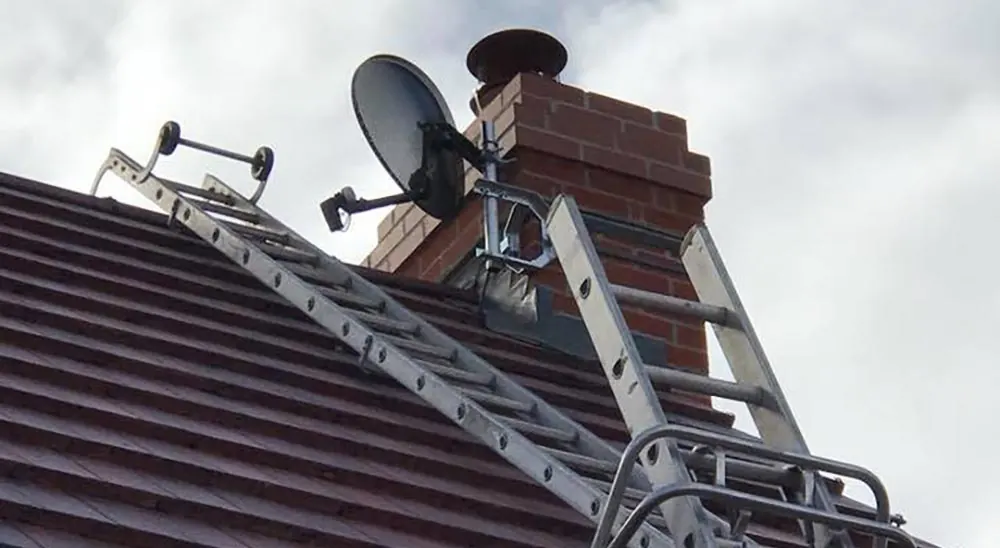
A position hidden behind a chimney or roof feature may not receive a reliable signal, and a location that looks unobtrusive from one angle may be conspicuous from another. An installer can assess possible mounting points and cable routes, while the planning authority or conservation officer can advise on acceptability. Do not install first and seek approval later, as retrospective resolution can be more difficult.
Rented homes and shared buildings
Tenants should obtain landlord or managing-agent approval before attaching equipment to an exterior wall, roof or balcony. A tenancy agreement may contain conditions on alterations, and the owner may ask for a particular route or mounting method. Share the proposed location, fixing approach and cable entry details before arranging work.
Flats and managed developments can have separate rules for shared roofs, façades and communal spaces. The building manager may require an application or specify an approved contractor. Check whether a communal satellite system can meet the viewing need before proposing a separate dish. If a location is rejected, ask what alternatives are permitted rather than proceeding with an unapproved installation.
Installation details that merit attention
The dish must be securely fixed to a suitable structure, accurately aligned and positioned with a clear view. A visually discreet position is not suitable if it compromises reception or cannot be maintained safely. Discuss bracket type, access and the completed appearance with the installer, particularly where delicate masonry or historic fabric could be affected.
Cable routing can influence both the appearance and impact of the work. Plan the entry point and route to minimise unnecessary drilling and visible cable, while maintaining appropriate weather protection. Any work on historic materials should be considered carefully and agreed with the relevant authority or owner. A clear installation proposal makes it easier to obtain informed approval before work begins.
Permissions before the installer attends
Collect the details likely to help decision-makers: property status, proposed dish position, approximate dimensions, fixing method and cable route. Ask whether photographs or a location plan are needed. If approval is required, wait for the relevant decision before booking a permanent installation. This avoids paying for a position that cannot be used or having to move newly fitted equipment.
An installer can provide information about the technical options but cannot grant planning consent or override a lease. Make clear who is responsible for obtaining each approval and keep a record of the agreed scope. If permission limits the location, share those conditions before the visit so the proposed work can be assessed against them rather than changed unexpectedly on the day.
If a dish is already fitted
An existing dish may have been installed under different circumstances, or its consent may not be known. Before replacing, enlarging or moving it, check what restrictions apply now. A change to the dish, mounting point or cable route can be treated differently from simply maintaining existing equipment, so ask the authority or building manager when uncertain.
If a dish must be removed for repairs, coordinate the work and confirm whether it can return to the same position. Record the current arrangement and consult the relevant decision-maker before selecting a replacement location. Reinstatement also requires safe fixing and signal checks. Do not assume that a contractor's ability to install equipment means that all property permissions have been satisfied.
If ownership of the dish is unclear, establish whether it belongs to a former occupier, a landlord or a service provider before arranging removal. Take care not to damage the roof covering or masonry while deciding what should happen to it. A permissions check and a technical inspection can be handled together, but each needs the right decision-maker.
Have a question about your own property? Contact our Mildenhall team.
Related services
Services this guide covers
Satellite TV
Freesat, Sky and AFN installations, multi-dwelling systems and callout diagnostics for signal problems.
Find out moreSky dish installation
New Sky dishes, replacements and realignment, with feeds to extra rooms and fault finding when the picture drops out.
Find out more
Freesat installation
Subscription-free satellite TV dishes, installed and aligned, with feeds to each room and your aerial combined on one plate.
Find out more
FAQs
Frequently asked questions
Want advice for your own home or business?
Call our Mildenhall team or send an enquiry and we will talk through the options.
Enquiries
Ask us a question or get a quote
Tell us a little about your property and what you need. We will get back to you to talk it through.
- 01638 515551
- info@solarsat.co.uk
- Phones and email Monday to Saturday, 8:30am to 6pm
- 8 High Street, Mildenhall, Suffolk IP28 7EQ. Showroom visits by appointment.