
Solarsat guide
Plan smart lighting around your home
Smart lighting can make everyday routines easier, but a dependable result starts with the lamps, switches and wiring you already have. Consider how you use each room before choosing controls or adding connected features.
Phones and email Monday to Saturday, 8:30am to 6pm. Showroom visits by appointment.
Start with the way each room is used
Make a list of the activities that need different light levels. A kitchen may need clear, even light for food preparation, while a living room can benefit from separate ambient and reading light. Bedrooms often need a convenient bedside control, and hallways may benefit from automatic operation at night. Thinking in activities rather than products helps identify where a scene or extra switch will genuinely be useful.
Note which fittings are controlled together and where you would prefer independent control. A single ceiling light may be adequate in a small room, whereas a larger open-plan area can need several circuits. Include exterior lights and shared spaces in the plan if you want consistent controls. This simple survey gives an installer a clearer picture of the changes required and helps avoid buying devices that do not solve a real problem.
Check lamps, dimmers and circuit compatibility
Dimming is not automatically supported by every LED lamp. The lamp, dimmer and control system must be compatible, and mixing different lamp models on one dimmed circuit can lead to flicker, a limited dimming range or unwanted noise. Check product specifications before ordering replacement lamps. If existing lamps are not suitable, changing them as part of the design can be simpler than trying to make mismatched components work together.
The wiring at the switch also matters. Some smart switches require a neutral conductor, while others are designed for particular circuit arrangements. Older installations may not match the assumptions made by a new device. Do not rely on the appearance of a switch or a photograph to establish what is present. A competent electrician can inspect the circuit, confirm the arrangement and advise whether a switch replacement, module or different control approach is appropriate.
Choose controls that remain easy to use
An app can be useful for setting schedules or controlling lights when away, but it should not be the only practical way to operate a room. Consider retaining familiar wall controls and agreeing what happens if the home network or internet connection is unavailable. Some systems keep core functions local; others depend more heavily on a hub or cloud service. Check the product documentation so expectations match how the system behaves.
Voice control may suit occasional commands, while a physical button is often quicker for repeated routines. Put controls where people naturally reach for them, such as near an entrance or beside a bed. If several family members or visitors use the house, choose names and buttons that make sense without explaining a complicated sequence. Simplicity is a feature: fewer dependable controls can be better than many rarely used options.
Build scenes for real routines
A scene is a group of settings recalled together, such as a brighter cooking arrangement or softer light for watching a film. Start with a small number that describe a clear purpose. Set each circuit to a level that is comfortable and practical, then test it at different times of day. A scene should make the room easier to use, not force everyone to remember an elaborate command or compromise on basic visibility.
Schedules and motion sensors can help in places where hands-free lighting is useful, but consider who uses the space and when. A sensor that turns lights off while someone is sitting still may be irritating. Set suitable delay periods and avoid automation that surprises people in bedrooms or shared areas. Keep a straightforward manual override available so occupants can adjust the light when the normal routine does not fit.
Plan installation, testing and future changes
Before work begins, agree which switches, fittings and circuits are included, whether decoration or lamp replacement is needed, and how controls will be labelled. Ask how the system is configured and whether you will receive the necessary account details and instructions. If a hub is used, choose a sensible location with power and network coverage. Documenting circuit names and scene behaviour makes later changes less dependent on memory.
After installation, test every control from the wall and app, including dimming at low and high levels. Check the expected response when a network connection is interrupted and make sure household users can operate essential lights. Keep model information and setup details together for future maintenance. A measured approach to compatibility, usability and handover will make smart lighting feel like a natural part of the home rather than another device to manage.
Have a question about your own property? Contact our Mildenhall team.
Related services
Services this guide covers
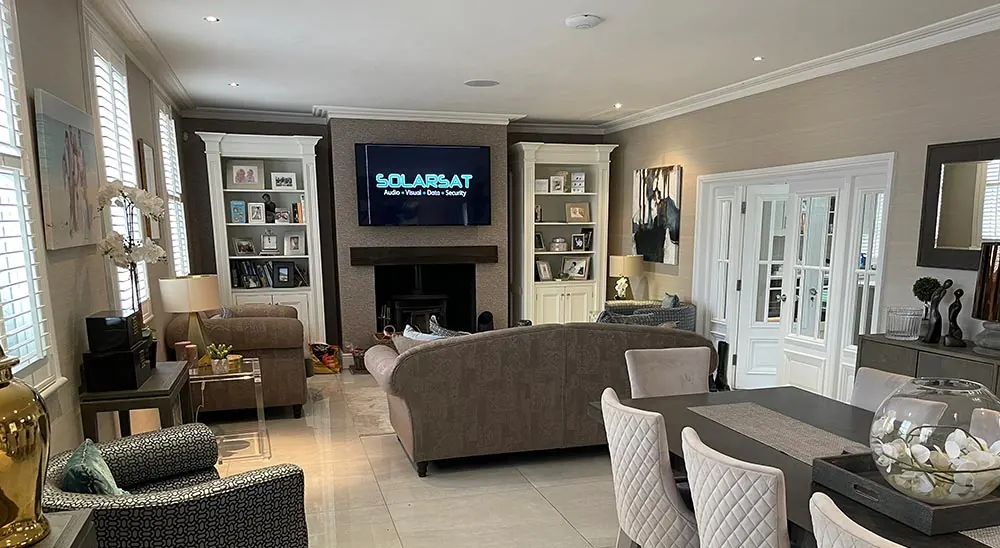
Smart home and automation
Control lighting, climate, appliances and AV from your phone or a control panel, at home or across a business.
Find out more
Electrical, solar and EV charging
Electrical repairs, maintenance and installations, plus EV chargers, solar PV panels and battery storage.
Find out more
FAQs
Frequently asked questions
Want advice for your own home or business?
Call our Mildenhall team or send an enquiry and we will talk through the options.
Enquiries
Ask us a question or get a quote
Tell us a little about your property and what you need. We will get back to you to talk it through.
- 01638 515551
- info@solarsat.co.uk
- Phones and email Monday to Saturday, 8:30am to 6pm
- 8 High Street, Mildenhall, Suffolk IP28 7EQ. Showroom visits by appointment.