
Solarsat guide
Storm damage to TV aerials and satellite dishes
Strong wind and driving rain can loosen aerial mounts, move a dish or expose a weakness in cables and connections. A sudden loss of television reception after a storm may indicate movement or water ingress, but the equipment should not be inspected from an unsafe position. Knowing what can be checked from the ground and what needs professional attention helps protect people and property.
Phones and email Monday to Saturday, 8:30am to 6pm. Showroom visits by appointment.
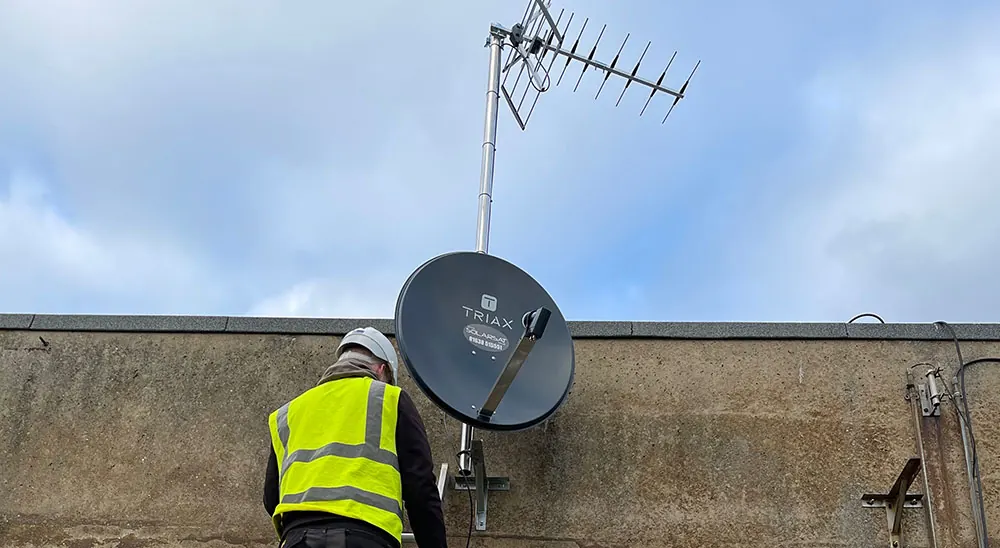
Start with safety
After severe weather, keep clear of any aerial, mast or dish that appears loose, bent or partly detached. Components can fall without warning, and a cable under tension may pull fixings from masonry or roof materials. Do not stand beneath the equipment or try to steady it. If a piece has fallen, keep others away from sharp edges and do not handle it if it is entangled with wires.
Inspect only from a safe position at ground level. If equipment is close to an overhead electrical line or a cable has become caught, do not approach it; contact the relevant utility or emergency service as appropriate. Avoid using a ladder during wet or windy conditions. The immediate priority is preventing injury and damage, not restoring television reception before the structure has been checked.
What visible signs can indicate
From the ground, look for a mast that is no longer upright, a dish that has shifted, hanging cable or a bracket that appears to have moved. Check for fallen fragments and obvious damage to roof edges or chimney masonry without approaching the affected area. These observations can help describe the problem to an installer, but they cannot confirm that fixings or concealed cable routes are sound.
Reception symptoms can provide further context. A dish that has moved may lose satellite services, while an aerial that has turned or sagged may affect terrestrial channels. Water entering a connector or cable can cause intermittent faults that appear later. If one television is affected but others work, note that too; the fault could be local rather than a common aerial failure.
Avoid unnecessary retuning or adjustments
Before changing settings, record which channels are missing and whether the problem affects every outlet. Repeated retuning can make a later comparison harder and may store an incomplete channel list if reception is temporarily poor. Check that the television is set to the expected source and that indoor leads are connected, but avoid altering roof equipment or communal distribution units.
Do not try to reposition a dish by eye. A small change in alignment can have a substantial effect, and a loose mount may not hold a safe or stable position. Similarly, tightening a bracket without knowing the state of the mast, wall or chimney can make damage worse. If the equipment is shared, report the issue to the building manager so a repair does not disrupt other users.
Professional inspection and repair
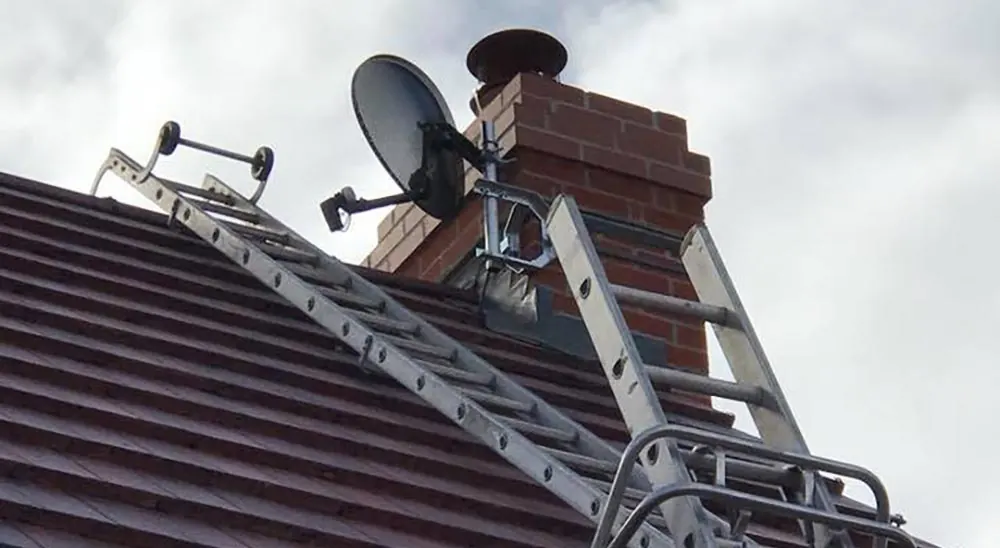
An installer can use suitable access equipment to inspect the mounting, aerial or dish, cable clips and entry points. Signal measurements can show whether the aerial position or dish alignment has changed and whether the cable or connectors are affected. The assessment should include the condition of the supporting surface, not just the component attached to it. A damaged chimney or roof may require a separate building repair.
Depending on findings, the remedy may be a secure refit, realignment, replacement of damaged cable or new mounting hardware. If the aerial or dish has been bent or its support has failed, replacement may be safer than trying to straighten it. Ask what was damaged, what has been repaired and whether reception was checked at the television outlet after the work.
Reducing the impact of future storms
Sound installation and suitable fixings help equipment withstand ordinary exposure, but no mounting can remove all weather risk. During a planned inspection, check that the supporting structure is sound, cables are secured without strain and outdoor connections are protected. Trees or loose objects near the equipment may also warrant attention if they could strike it in high winds.
Keep a note of recurring movement or reception faults and arrange inspection when it is safe to do so. Do not wait beneath an unstable installation or attempt a temporary repair from a roof. For a shared system, identify the contact responsible for arranging access and communicating service interruptions. Good records of equipment and previous repairs can make a future assessment more efficient.
Have a question about your own property? Contact our Mildenhall team.
Related services
Services this guide covers
FAQs
Frequently asked questions
Want advice for your own home or business?
Call our Mildenhall team or send an enquiry and we will talk through the options.
Enquiries
Ask us a question or get a quote
Tell us a little about your property and what you need. We will get back to you to talk it through.
- 01638 515551
- info@solarsat.co.uk
- Phones and email Monday to Saturday, 8:30am to 6pm
- 8 High Street, Mildenhall, Suffolk IP28 7EQ. Showroom visits by appointment.