
Solarsat guide
TV wall mounting and brackets: a practical UK guide
Wall mounting frees up floor space and gives a room a cleaner finish, provided the bracket and fixings match the wall behind the plaster. This guide covers wall types, bracket choices, viewing height, cost factors and when to bring in an installer.
Phones and email Monday to Saturday, 8:30am to 6pm. Showroom visits by appointment.
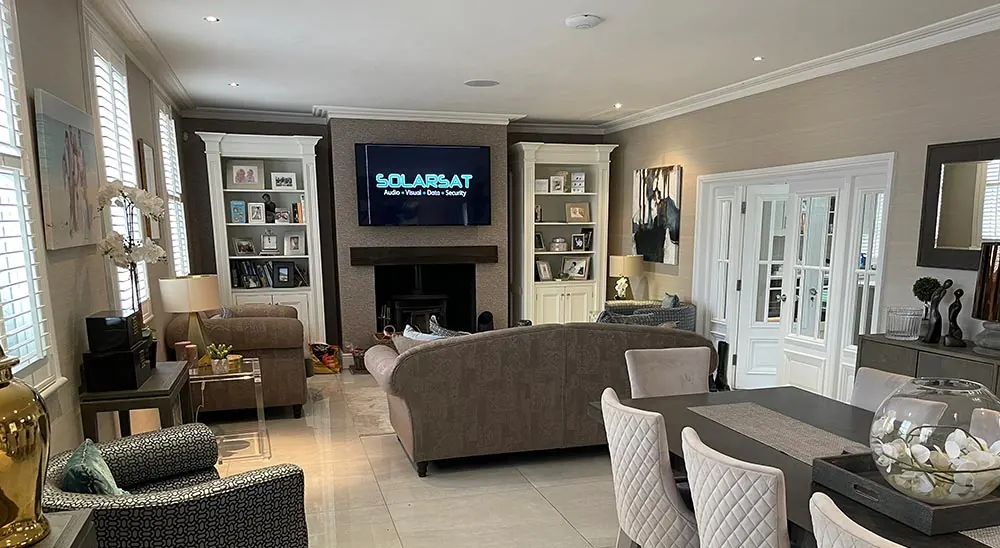
Why the wall type decides everything
A modern flat-screen television is lighter than an older plasma set, yet a 65-inch or 75-inch screen still places a serious load on the wall, especially when it is pulled out on an articulated arm. Before choosing a bracket or buying fixings, you need to know what is behind the paint.
Solid brick and dense concrete block are the most straightforward surfaces. With the right masonry plugs and coach bolts, they hold heavy televisions and full-motion arms securely. Older lime-mortar brick can crumble near the edges, so holes need to be drilled cleanly into the body of the brick rather than the mortar joints.
Stud walls made of timber or metal framing behind plasterboard need a different approach. Standard plastic wall plugs in plasterboard alone will pull out under load. The safest method is to anchor the bracket directly into the timber studs, or to span across two studs with a wide wall plate or a recessed plywood pattress.
Dot-and-dab walls are very common in newer UK homes. Here, plasterboard is glued to a blockwork wall with dabs of adhesive, leaving a narrow air gap behind the board. Ordinary plugs only grip the plasterboard and fail. Specialist long sleeve fixings or resin anchors bridge the gap and bite into the solid block behind.
Choosing between fixed, tilt and full-motion brackets
A fixed flat bracket sits closest to the wall and puts the least leverage on the fixings. It is the neatest option when the sofa faces the screen directly at eye level, though it leaves little room behind the set for plugging in new cables later.
A tilting bracket angles the screen slightly downwards. It helps when a television must sit a little higher than ideal, such as above a sideboard or fireplace, and it can reduce glare from overhead lights or opposite windows.
A full-motion or cantilever bracket pulls the screen away from the wall and swivels left or right. It is useful in open-plan rooms, corner positions or kitchens where you watch from different angles. Because extending the arm multiplies the pull on the top bolts, the wall structure and fixings must be up to the extra leverage.
Always check the VESA pattern on the back of the television and the weight rating of the bracket. Cheap thin-steel arms often sag under larger screens, leaving the television visibly crooked when extended.
Getting the height and viewing position right
The most common regret after mounting a television is fitting it too high. When you are seated on your main sofa, the middle of the screen should sit roughly at eye level, or only slightly above. Looking up for two hours causes neck strain and washes out contrast on many panels.
Chimney breasts often tempt people to mount the screen high above a fire. If you use a wood burner or open fire, heat rising up the breast can shorten the life of the television and warp plastic housings. A simple check is to run the fire as normal and hold a thermometer at the planned screen height before committing.
Think about daylight as well. Facing a television directly opposite a south-facing window creates reflections all afternoon. A slight angle or a room layout tweak often solves glare better than turning brightness to maximum.
What affects the cost of professional TV wall mounting
Rather than a single flat figure, installation cost depends on the size of the screen, the wall construction and how you want the cables handled. A straightforward fix onto a solid brick wall with surface trunking is a much shorter job than mounting a large screen onto dot-and-dab blockwork with hidden cables.
Extra work that adds time includes supplying a heavy-duty cantilever bracket, chasing brick walls for concealed cables, moving or adding a mains socket behind the screen, or integrating a soundbar bracket underneath the television.
If you already have a bracket, check that it is genuine, complete with spacers and bolts, and rated for both the screen size and the wall type. Installers will often advise swapping a flimsy bracket rather than risking a damaged television.
Common mistakes to avoid
Drilling without checking for hidden pipes and electrical cables is the biggest hazard. Cables usually run vertically or horizontally from sockets and switches, and central heating pipes often run behind chimney breasts and stud walls. A reliable detector and careful inspection before drilling prevent expensive repairs.
Forgetting about cable access is another frequent issue. Once a large television is hung on a slim bracket, reaching HDMI ports or aerial sockets can be awkward. Planning which leads you need, and leaving a spare HDMI cable in place, saves taking the screen off the wall later.
Do not overlook soundbar placement. A soundbar mounted on the wall or attached beneath the screen needs clearance so upward-firing speakers are not blocked by the bottom edge of the television.
When to hire a professional installer
A confident DIYer with the right masonry drill, spirit level and fixings can sometimes fit a small fixed bracket to a plain brick wall. Once the screen is 55 inches or larger, the wall is dot-and-dab or studwork, or you want a full-motion arm and neat hidden cables, hiring an installer is the safer choice.
A professional brings the right fixings for the exact wall, checks for hidden services, levels the bracket accurately and tests every connected source before leaving. If you are planning a wall mount or media wall, our team can advise on the cleanest way to do it.
Have a question about your own property? Contact our Mildenhall team.
Related services
Services this guide covers
TV wall mounting
TVs fixed securely to solid, flint or plasterboard walls, with the right bracket and the cables hidden or neatly trunked.
Find out more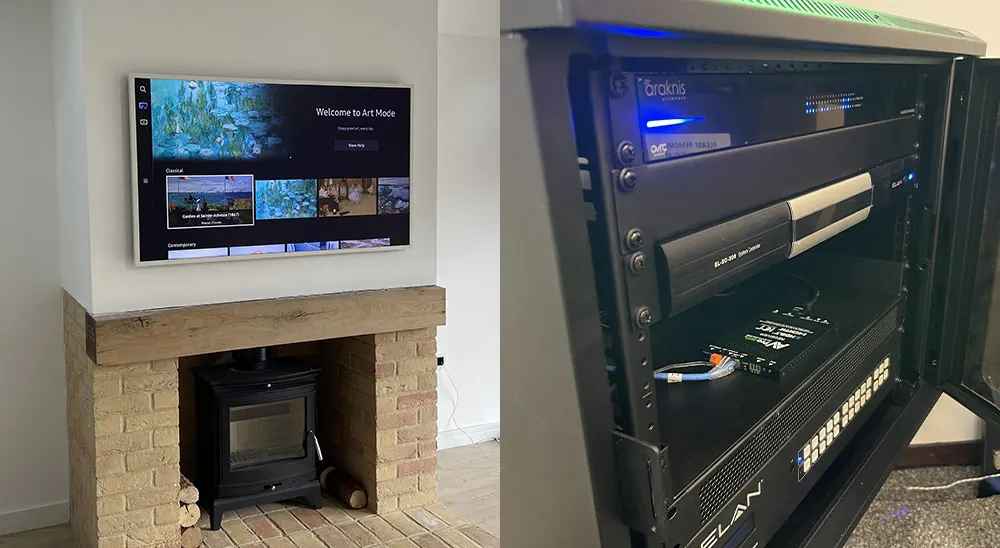
Media wall installation
AV design, wiring and installation for media walls, planned with your builder or joiner so the screen, sound and equipment fit.
Find out more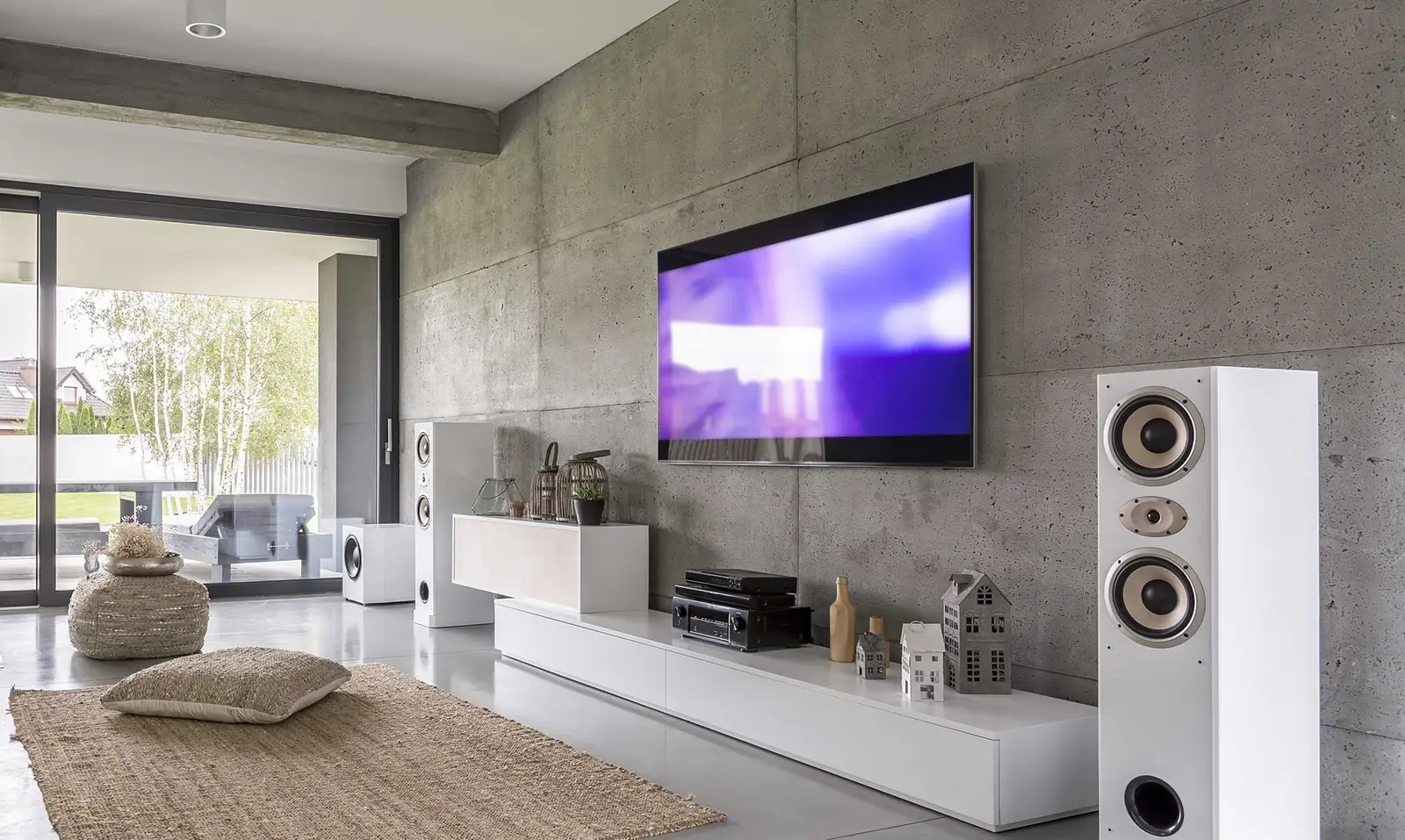
Audio-visual and home cinema
TV wall mounting, media walls, home cinema, multi-room music and commercial AV, designed and installed by our own team.
Find out more
FAQs
Frequently asked questions
Want advice for your own home or business?
Call our Mildenhall team or send an enquiry and we will talk through the options.
Enquiries
Ask us a question or get a quote
Tell us a little about your property and what you need. We will get back to you to talk it through.
- 01638 515551
- info@solarsat.co.uk
- Phones and email Monday to Saturday, 8:30am to 6pm
- 8 High Street, Mildenhall, Suffolk IP28 7EQ. Showroom visits by appointment.